

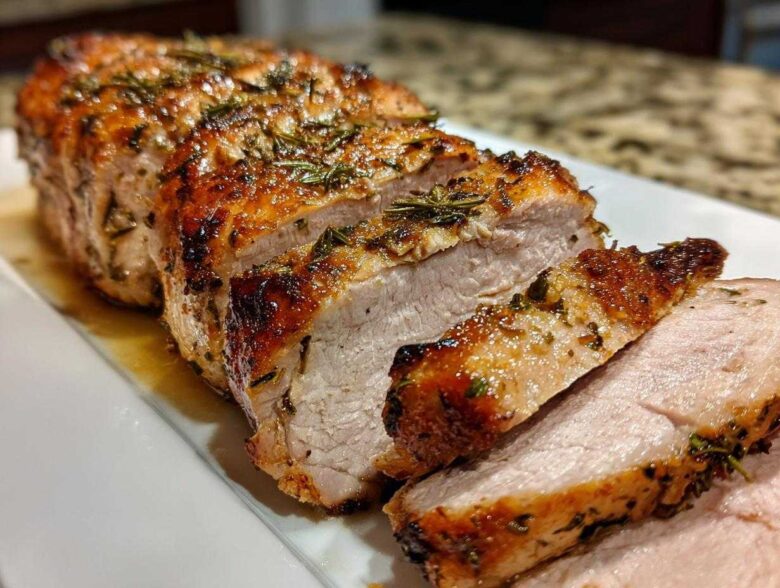
If you’ve ever nervously pulled a roast out of the oven, crossed your fingers, and then cut into it only to find it dry and tough—girl, I’ve been there! That’s exactly why I wanted to share this method for the most unbelievably pork loin roast you’ll ever make. This isn’t just another recipe; this is the path to a consistently tender and incredibly juicy pork loin, whether you’re aiming for a quick Tuesday meal or a full-blown **sunday roast recipe**. Here at Spoon Swirl, we believe the kitchen is where the best connections happen. I’m Hana, and using this simple technique truly helps me swirl away the week’s stress, giving us something wonderful to share.
If you want to know more about how Noah and I started this journey from that lopsided loaf of bread, you can read all about our story here: our beginning in the kitchen.
Why This Juicy Pork Loin Roast Recipe Works Every Time
Honestly, the secret to a tender **juicy pork loin** is less about fancy ingredients and more about trusting the thermometer. For ages, I used to overcook pork because I was scared of undercooking it! Once I committed to pulling the roast out precisely when it hit 145 degrees F, everything changed. This recipe is foolproof because it keeps the seasoning simple and focuses entirely on temperature control, making it the most reliable **easy pork dinner** in my rotation.
Quick Prep for a Weeknight Dinner
Don’t let the idea of a roast scare you off on a busy night! We clock in at barely 10 minutes of prep for this whole **pork loin roast**. Seriously, you toss it, rub it, season it, and put it in the oven. It’s the perfect anchor for any **weeknight dinner** when you want something that feels special without keeping you stuck in the kitchen all evening.
Essential Ingredients for Your Pork Loin Roast
I love that this recipe relies on pantry staples. There’s no need for complicated marinades or imported spices here! When I put this **pork loin roast** together, I make sure every ingredient is measured just right. Precision matters when you’re dealing with leaner cuts of meat, and the combination of these simple things creates that amazing crust.
Here is exactly what you need for that 3-pound roast. Don’t substitute the salt measurement—we need that structure!
- 3 lb pork loin roast, bone out
- 2 tablespoons olive oil
- 1 tablespoon kosher salt
- 1 teaspoon black pepper
- 1 teaspoon garlic powder
- 1 teaspoon dried thyme
If you’re planning a bigger **sunday roast recipe**, just scale these amounts right up. But for this basic formula, stick to these amounts. That thyme and garlic powder blend is the magic that screams “comfort food” without burning your prep time.
Step-by-Step Guide to Oven Roasted Pork Loin Roast
Getting a beautiful, crusty exterior on this **oven roasted pork** while keeping the inside tender is all about the heat control. We use a two-stage temperature approach that I learned works wonders for keeping everything moist. Don’t skip the drying step, trust me—that’s how you get that gorgeous sear!
Prepping the Pork Loin Roast for Maximum Flavor
First things first: grab your paper towels and pat that pork loin dry everywhere. I mean *everywhere*. When meat is perfectly dry, the salt and spices stick better, and you get an amazing crust instead of just steaming the outside. Next, drizzle it with the olive oil—just enough to coat it lightly. Then, mix up your seasonings. This is where you want to get hands-on! Sprinkle that glorious mix all over the roast, and use your hands to gently, but firmly, press that seasoning mix right into the meat. It needs to adhere for the best flavor.
Achieving the Perfect Pork Loin Internal Temp
Now we head to the hot oven! Preheat everything to 400 degrees F and roast for just 15 minutes. This initial blast sets that crust. After those first 15 minutes, lower the oven down to 350 degrees F. This is the gentle phase where we focus solely on the **pork loin internal temp**. Insert your meat thermometer into the thickest part of the roast, avoiding any bone if you have one. Keep an eye on it! We are aiming for 145 degrees F. If you’re planning a big **sunday roast recipe**, you might need about 15 to 20 minutes per pound in this slower heat.
Once you hit that 145°F, you pull it out immediately. You can find more of my favorite dinner recipes when you head over to our Dinner category!
The Crucial Resting Period for a Juicy Pork Loin Roast
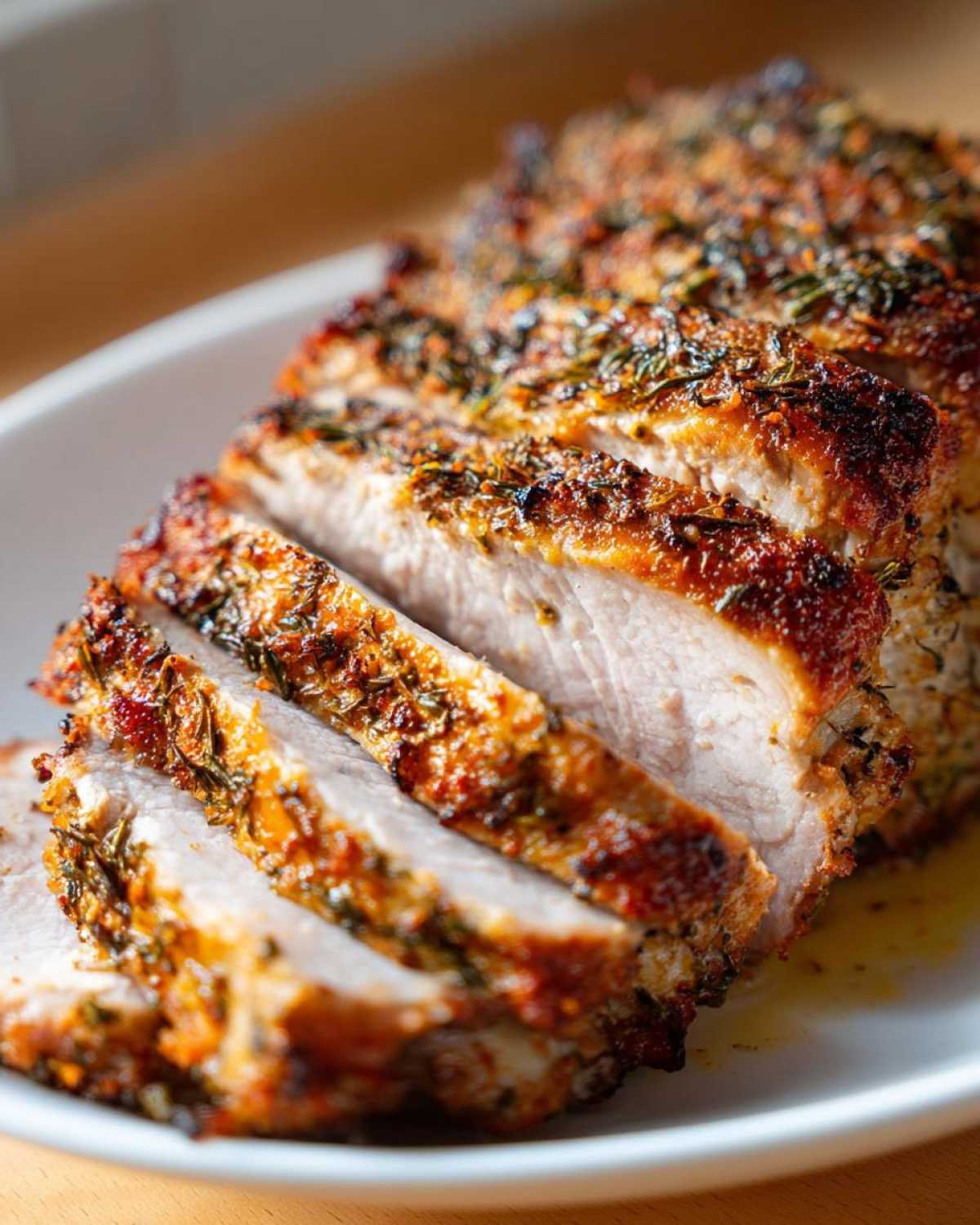
This is the step where most people lose the battle for a juicy pork loin, and honestly, I used to fall into this trap too! You’ve done all that hard work—the perfect seasoning, the exact temperature—and now you want to eat it *right now*. Please, fight that urge! As soon as you pull that beautiful roast from the oven when it hits 145 degrees F, you have to wrap it loosely with foil and forget about it for at least ten whole minutes. I usually give mine closer to 12 or 15 if I’m finishing up my pan sauce.
Why is this non-negotiable? When meat cooks, all those wonderful juices rush to the center, building high pressure. If you slice it right away, all that moisture just floods out onto your cutting board, leaving you with dry meat. Letting it rest allows those juices to settle down and redistribute themselves evenly throughout the muscle fibers. It’s like letting steam settle after a big sigh! When you cut into properly rested meat, those juices stay *inside* the slices. That, my friends, is the secret to guaranteeing slice after slice of tender, flavorful pork.
Making a Simple Pan Sauce Gravy for Your Pork Loin Roast
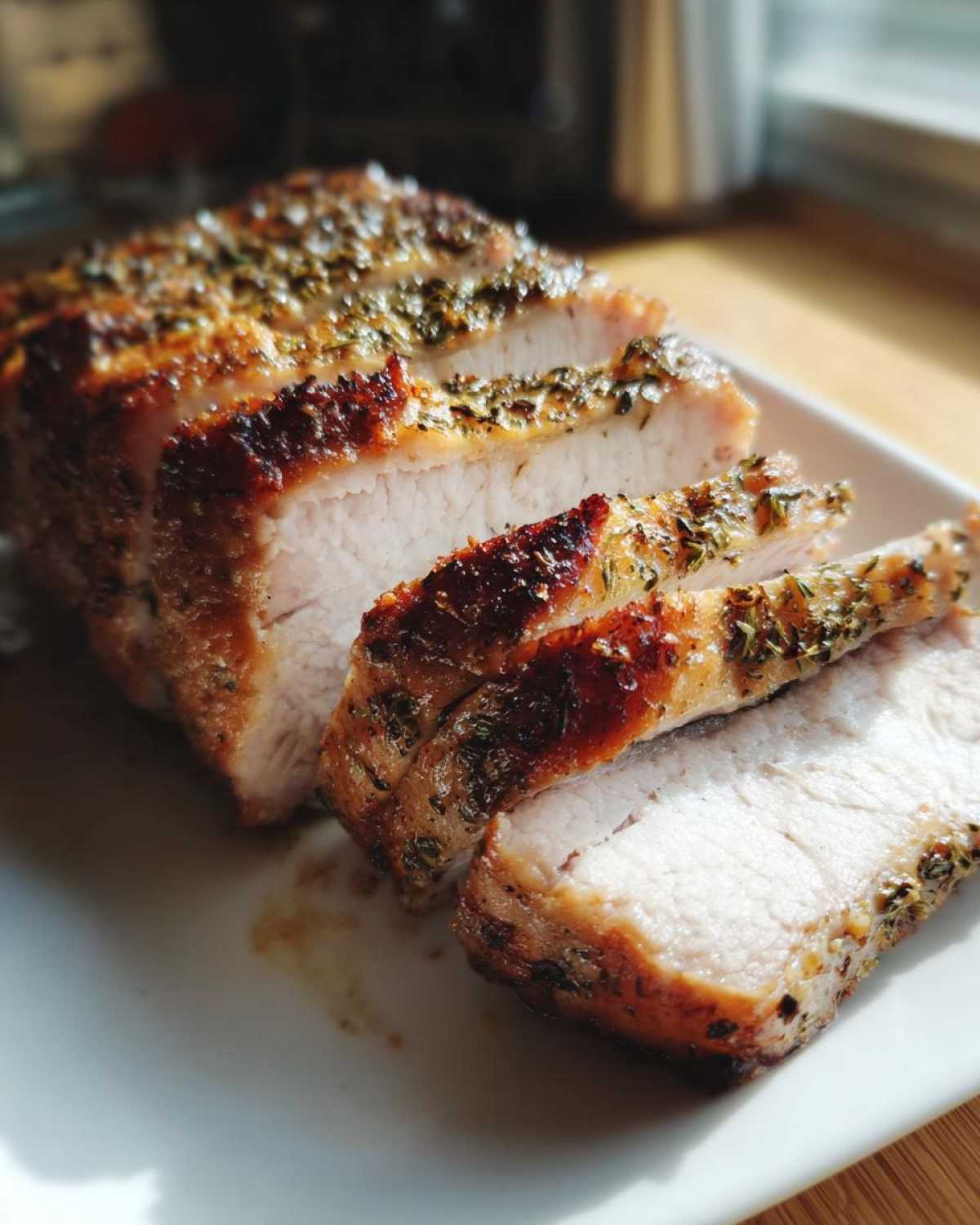
Okay, once you get that roast happily resting under the foil, it’s time for my favorite part of any substantial **sunday roast recipe**: the drippings! Don’t you dare wash that pan out yet. Those browned bits stuck to the bottom—we call that fond—are pure gold for building flavor for your **pan sauce gravy**. It’s ridiculously easy, and it takes your plain roast to elevated dinner status in about five minutes.
Here is the quick rundown. Make sure you move your roasting pan onto a stovetop burner *after* you’ve taken the pork off to rest. Keep that burner on medium heat. You’ll use those amazing leftover drippings as your base, which is already miles better than using just water!
First, try to scrape up all those dark, flavorful bits stuck to the bottom of the pan using a wooden spoon. That’s called deglazing, and it releases all that roasted pork goodness. Now, pour in just a splash of broth—chicken or beef works fine. Let it bubble up for a minute.
If you like your gravy thick, which I definitely do, you need a slurry. Mix one tablespoon of cornstarch with two tablespoons of *cold* water in a little cup until it’s totally smooth. Pour that mixture slowly into your simmering drippings and broth while stirring continuously. Keep stirring until it thickens up into a beautiful, glossy **pan sauce gravy**. It happens fast, so be watching!
Taste it! Does it need a tiny pinch more salt? Maybe a crack of pepper? That simple homemade gravy poured right over those tender slices makes the whole meal feel like a celebration. I promise, once you start making gravy this easily, you won’t ever go back to the jarred stuff!
Tips for Success with Your Pork Loin Roast
Now that we’ve mastered the heat and the rest, let’s talk about a few extra little things that always make my **pork loin roast** perform perfectly. These aren’t included in the main step-by-step because they are more about finesse and experience, but getting these small details right really seals the deal for a tender, flavorful result. It’s these extra considerations that turn a good roast into one you tell your friends about!
If you want to browse even more of my kitchen experiments and thoughts on cooking, check out my latest scribbles on the Spoon Swirl Blog!
Ingredient Notes and Substitutions for Pork Loin Roast
The recipe uses thyme, but don’t panic if you don’t have it on hand! Thyme, rosemary, or even a little dried sage all pair beautifully with pork. Just measure them a little carefully; herbs can be strong. If you swap out the dried thyme for rosemary, maybe start with just ¾ teaspoon, then taste your seasoning mix before you rub it on. Rosemary adds such a lovely woodsy note to the **pork loin roast**!
When it comes to the oil, olive oil is great because it has a slightly higher smoke point than, say, plain vegetable oil, and it adds a nice fruity flavor layer. If you only have regular cooking oil, that’s totally fine for this method; we’re just using it to help the seasoning stick. However, switching the olive oil for melted butter usually results in a darker, richer crust, but sometimes that crust can burn because butter has milk solids in it, so watch the temperature closely if you try that swap!
One critical tip that applies to slicing, way beyond the ingredients, is how you cut the finished product. After the roast has rested, make sure you slice it *against* the grain. Look closely at the muscle lines running through the meat and cut directly perpendicular to them. This shortens the muscle fibers, guaranteeing that every slice feels tender and melts in your mouth. Cutting with the grain will just leave you with long, chewy strands, no matter how perfectly you cooked that **juicy pork loin**!
Serving Suggestions for an Easy Pork Dinner
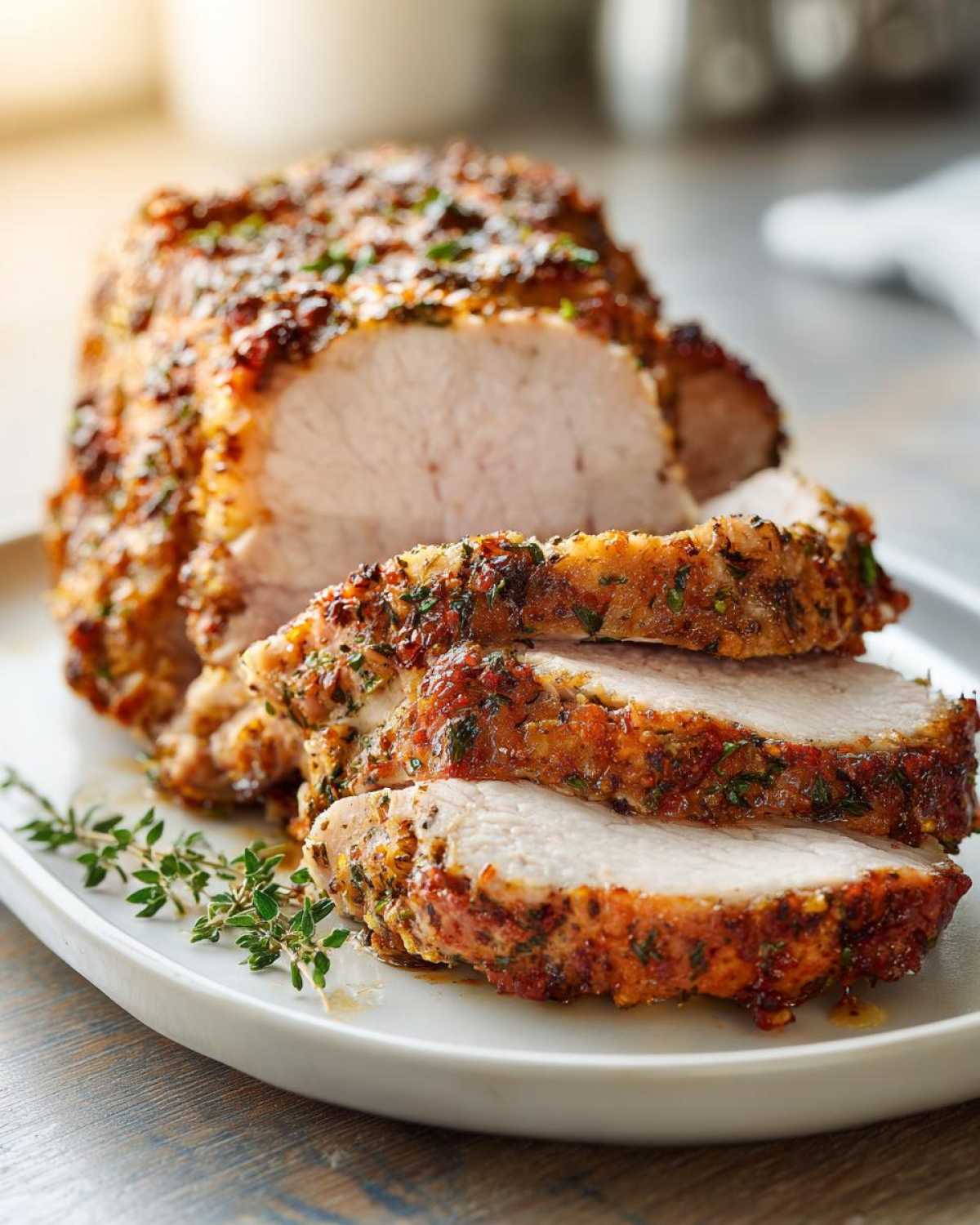
This flavorful **oven roasted pork** is so wonderfully versatile. Since it’s a lean cut, it pairs well with sides that bring richness, or simple greens to balance it out. I always try to have two sides ready: one starchy/comforting item for a proper **sunday roast recipe**, and something quick if I’m serving it up as an **easy pork dinner** on a Wednesday.
When I’m rushing during the week, I don’t want to spend an hour on sides, so I keep things super simple. We love having this sliced thinly over a big salad with a tangy vinaigrette. Or, if Noah is having one of those long days, I’ll whip up some quick mashed potatoes—they are the perfect vehicle for soaking up all that delicious **pan sauce gravy** we just made!
For those times when you have more energy, especially if you are planning a weekend meal, roasted root vegetables are fantastic. Toss carrots, potatoes, and maybe some parsnips with a little more olive oil, salt, and pepper, and roast them right alongside your **pork loin roast** for the last 30 minutes! They absorb all those yummy pork drippings that fall to the bottom of the pan.
If you’re looking for something on the lighter side, or maybe you’re just browsing for treats to enjoy while you’re waiting for the roast to cook, take a peek at some of my favorite snacks: you might find something fun here!
Ultimately, a good, garlicky green component always cuts through the richness of the meat beautifully. Steamed green beans tossed with a little lemon zest, or even just a simple side of roasted asparagus, always makes the plate feel complete for this main course meat.
Storage and Reheating Instructions for Leftover Pork Loin Roast
The best part about roasting a nice big **pork loin roast** is having leftovers! Seriously, cold roast pork slices for lunch the next day are one of my favorite easy meals. But we have to treat our leftovers right so they don’t turn into sad, chewy meat.
The main goal when reheating pork is to avoid drying out those precious juices we worked so hard to lock in with the resting step. You can safely store your cooked **pork loin roast** in an airtight container in the refrigerator for about three to four days. Don’t just toss it in a plastic bag; a sealed container makes a huge difference in keeping it from absorbing fridge odors!
Now, for reheating—this is where technique matters if you want to keep that **juicy pork loin** feeling!
- Reheat Slices Thinly: I find the absolute best method is slicing the cold roast thinly *before* reheating. Thinner slices heat up much quicker and more evenly.
- Add Moisture Back: Place those thin slices in a microwave-safe dish. Add one small splash of liquid—just a tablespoon or two of broth, water, or even that **pan sauce gravy** you made earlier. You don’t want to drown the meat, just create a little steam environment.
- Low and Slow in the Microwave: Cover the dish tightly, either with a lid or microwave-safe plastic wrap (vented slightly). Microwave it on 50% power in short 30-second bursts until it’s just heated through. It should feel warm, not piping hot. If you blast it on high power, it’s going to seize up and get tough! For Sandwiches: If you are making warm sandwiches, slicing it thin first is essential. Reheat it just until warm, then pile it high on a nice roll.
If you happen to have any leftover **pan sauce gravy**, saving that separately is great! You can reheat the gravy on the stovetop, and then spoon the warm gravy right over the reheated pork slices. The gravy keeps the meat incredibly moist and tender. This makes that leftover pork feel almost as delicious as the first **sunday roast recipe** serving!
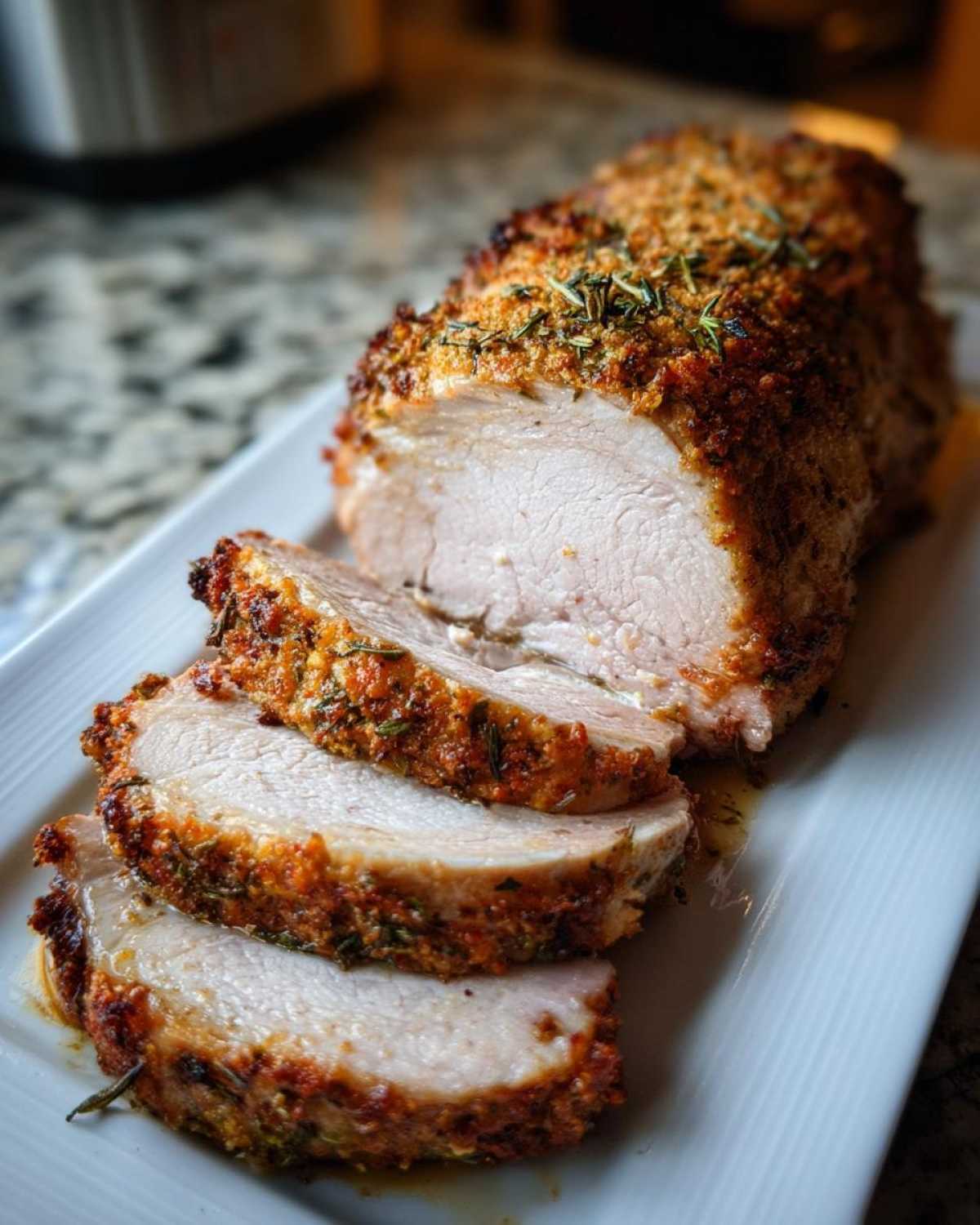
Frequently Asked Questions About Pork Loin Roast
It’s totally normal to have questions when you’re relying on temperature to guide you, especially when you’re aiming for that perfect **juicy pork loin**! Noah and I get asked a lot of the same things about this **oven roasted pork**, so I gathered a few of the most common ones here to help you feel completely confident before you start rubbing down your roast.
Can I cook this pork loin roast from frozen?
Oh, sweetie, please don’t try to rush things by cooking it from frozen! The initial high-heat blast that we use to set that gorgeous crust on the **pork loin roast** will just burn the outside layer before the inside even starts to thaw. If you realize halfway through the day that you forgot to pull the roast out the night before, the safest bet is to let it thaw completely in the refrigerator (that usually takes a full 24 hours for a 3-pound roast). If you’re really in a pinch for a **weeknight dinner** and it’s only partially frozen, you risk uneven cooking and a dry texture. It’s worth keeping this recipe in your back pocket for when you can prep safely!
What should the final internal temperature be if I like my pork well-done?
I totally get that some people just prefer their meat cooked through completely! While the USDA guidelines and my personal goal for the best, most tender result involves pulling the **pork loin roast** off the heat at 145 degrees F (because the temperature continues to rise during resting, giving you a perfect medium), you can go higher if that’s your comfort zone. However, I have to give you a little warning: once you start moving into the 155°F to 160°F range for your final **pork loin internal temp**, you will absolutely start losing that beautiful moisture. If you must go higher, make sure you heavily baste it during the 350-degree phase, and for goodness sake, resting is even more important then to try and salvage any moisture left!
How long does the roast need to rest before slicing?
This is one of the most important questions for achieving a **juicy pork loin** finish! You honestly need to rest it for a minimum of 10 minutes, but honestly, 15 is better, especially if your roast is on the larger side. Think of it like this: while the roast is resting under the foil, the internal temperature is still climbing a few degrees. This carryover cooking ensures it hits that 145-degree mark safely without you having to keep the heat on the meat. If you slice too soon, you’ll see pools of liquid escaping, and that’s moisture we don’t want to waste when planning an **easy pork dinner**!
Estimated Nutrition for This Pork Loin Roast
When we plan out a hearty **sunday roast recipe**, we definitely think about how the meal fuels us, but I always remind myself that these numbers are just estimates. Noah and I cook using whole ingredients and we rarely measure things like salt exactly the way a lab would! So, consider these guidelines based on the specific ingredients listed for the 3-pound roast, portioned out for six servings.
This **pork loin roast** turns out to be a fantastic source of protein, which is why it feels so satisfying, but because it’s such a lean cut, the fat content stays quite low when you skip heavy sauces. If you use the simple **pan sauce gravy** mentioned in the steps, your numbers will shift slightly higher due to the broth and thickener, but it’s still a wonderful way to enjoy an **easy pork dinner**.
Here’s the breakdown per 4-ounce serving, based on our recipe:
- Serving Size: 4 oz cooked
- Calories: 280
- Sugar: 1g
- Sodium: 450mg
- Fat: 12g (with 4g Saturated Fat)
- Carbohydrates: 0g
- Protein: 40g
- Cholesterol: 95mg
Please remember, just like when we bake with real vanilla extract instead of imitation, the quality of your ingredients changes the final nutritional profile! For full details on how we approach these figures in our kitchen, you can check out our standard disclaimer: our full disclaimer information.
Share Your Spoon Swirl Pork Loin Roast Success
Now that you’ve tried that beautiful, foolproof **oven roasted pork**, I really, truly want to hear all about it! This is the spoon swirl moment for us—sharing the warmth and the satisfaction that comes from making something so delicious with your own two hands. Did you manage that perfect **pork loin internal temp**? Did your **pan sauce gravy** come out silky smooth?
Please, take a minute and let me know how it went in the comments below. Leaving a rating helps other home cooks feel confident trying this recipe, and seeing photos of your finished roast makes my day! We love hearing how you tailored it, whether you used fresh rosemary instead of dried thyme, or if you served it with roasted asparagus instead of potatoes.
This recipe has brought so much comfort and connection to my kitchen, and seeing how it shows up on your tables—whether for a busy **weeknight dinner** or a big gathering—is the whole reason we started Spoon Swirl. Knowing that you slowed down, took a breath, and created an amazing **easy pork dinner** for your family is the best reward I could ask for. Happy cooking, and please share your success!
PrintJuicy Oven Roasted Pork Loin Roast
Make a tender and juicy pork loin roast using simple steps for a perfect weeknight dinner or Sunday roast.
- Prep Time: 10 min
- Cook Time: 60 min
- Total Time: 70 min
- Yield: 6 servings
- Category: Dinner
- Method: Oven Roasting
- Cuisine: American
- Diet: Low Fat
Ingredients
- 3 lb pork loin roast, bone out
- 2 tablespoons olive oil
- 1 tablespoon kosher salt
- 1 teaspoon black pepper
- 1 teaspoon garlic powder
- 1 teaspoon dried thyme
Instructions
- Preheat your oven to 400 degrees F.
- Pat the pork loin roast dry with paper towels. This helps create a nice crust.
- In a small bowl, mix together the kosher salt, black pepper, garlic powder, and dried thyme.
- Rub the olive oil all over the pork loin roast.
- Sprinkle the seasoning mix evenly over the entire surface of the roast, pressing it gently so it adheres.
- Place the seasoned pork loin roast in a roasting pan or on a rimmed baking sheet.
- Roast at 400 degrees F for 15 minutes.
- Reduce the oven temperature to 350 degrees F. Continue roasting until the internal temperature reaches 145 degrees F on a meat thermometer, which usually takes about 15 to 20 minutes per pound.
- Remove the pork loin roast from the oven when it hits 145 degrees F.
- Tent the roast loosely with foil and let it rest for at least 10 minutes before slicing. This resting time is key for a juicy pork loin.
- Slice against the grain and serve. You can make a simple pan sauce gravy using the drippings.
Notes
- For a perfect roast, aim for an internal temperature of 145 degrees F. The temperature will rise a few degrees while resting.
- If you want a pan sauce gravy, place the roasting pan on the stovetop over medium heat after removing the roast. Scrape up any browned bits, add a splash of broth, and thicken with a cornstarch slurry.
- This recipe works well for an easy pork dinner or a substantial Sunday roast.
Nutrition
- Serving Size: 4 oz cooked
- Calories: 280
- Sugar: 1
- Sodium: 450
- Fat: 12
- Saturated Fat: 4
- Unsaturated Fat: 8
- Trans Fat: 0
- Carbohydrates: 0
- Fiber: 0
- Protein: 40
- Cholesterol: 95