

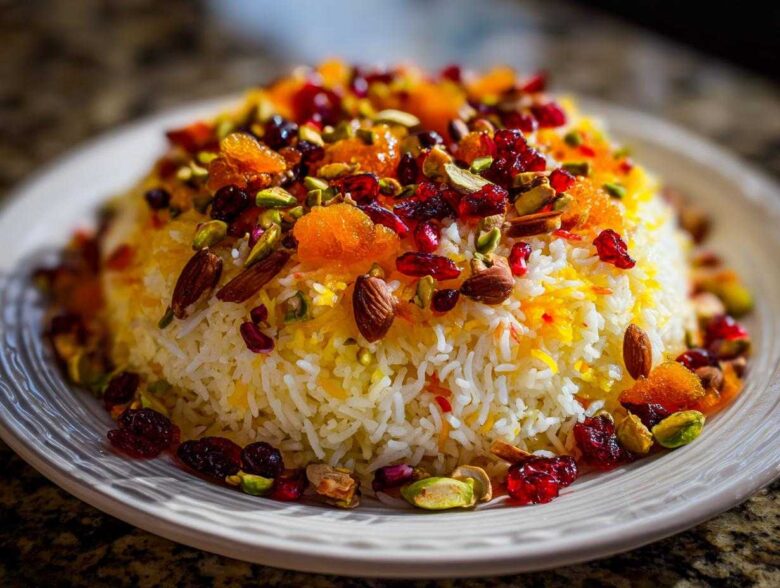
When the holidays roll around, especially a joyous time like Purim, forget boring white rice! You need something that sparkles, something that tells everyone you went the extra mile. I’m talking about rice so stunning it deserves a standing ovation. This recipe for Persian Jeweled Rice Shirin Polo Festive Purim Side Dish is truly my crowning achievement, and it’s all about layering those gorgeous flavors.
I remember the first time I served this for a big family gathering; my aunt swore I’d bought it from a fancy restaurant! But trust me, getting that perfectly fluffy saffron rice paired with bright, tangy jewels is less about magic and more about knowing a few simple secrets. This guide is going to walk you through every single step, from rinsing the basmati to flipping that perfect, crispy Tahdig onto the platter.
If you’re ready to seriously impress your guests, keep reading! We’re starting with the gorgeous saffron rice base, and I’ll show you exactly how to prepare those glittering toppings before we even turn on the stove. Check out the story behind my kitchen adventures here if you want to know more about why I love sharing these classic recipes!
Why This Persian Jeweled Rice Shirin Polo Festive Purim Side Dish Stands Out
I promise you, this isn’t your average weeknight pilaf. This Persian Jeweled Rice Shirin Polo Festive Purim Side Dish is designed to be memorable. It truly shines on a holiday table because of three things:
- It looks absolutely incredible—like a treasure chest was dumped right on top of the rice.
- The bright tang of the barberries cuts through the richness of the saffron perfectly.
- You get that coveted crispy Tahdig underneath all that fluffiness!
It brings elegance to any Purim spread without requiring you to stir constantly.
Essential Ingredients for Your Persian Jeweled Rice Shirin Polo Festive Purim Side Dish
Okay, don’t let this ingredient list scare you; every single spice and fruit plays an important role in making this the best Persian Jeweled Rice Shirin Polo Festive Purim Side Dish you’ve ever made. First, you need high-quality ingredients that respect the flavor. That means at least two cups of long-grain basmati rice—rinse it till it screams at you that the starch is gone! And please, use real saffron; none of that fake yellow powder.
For the crunch and color, we need butter or oil and that all-important 1/4 cup of dried orange peel strips. Seriously, the peel makes such a difference, but hold on—we’re going to talk about how to prepare those jewels in just a moment. Remember that 2 tablespoons of oil are solely reserved for creating that beautiful, golden crust on the bottom, the Tahdig!
I always lay out all my components before I start, which you can check out in my full breakdown here. Organization is everything when you’re working with delicate, layered rice!
Jewel Components: Fruits, Nuts, and Flavorings
This is where the ‘jewel’ part comes in! You have your slivered almonds and chopped pistachios, which you should lightly toast until they smell amazing. That toast really wakes up their flavor, trust me.
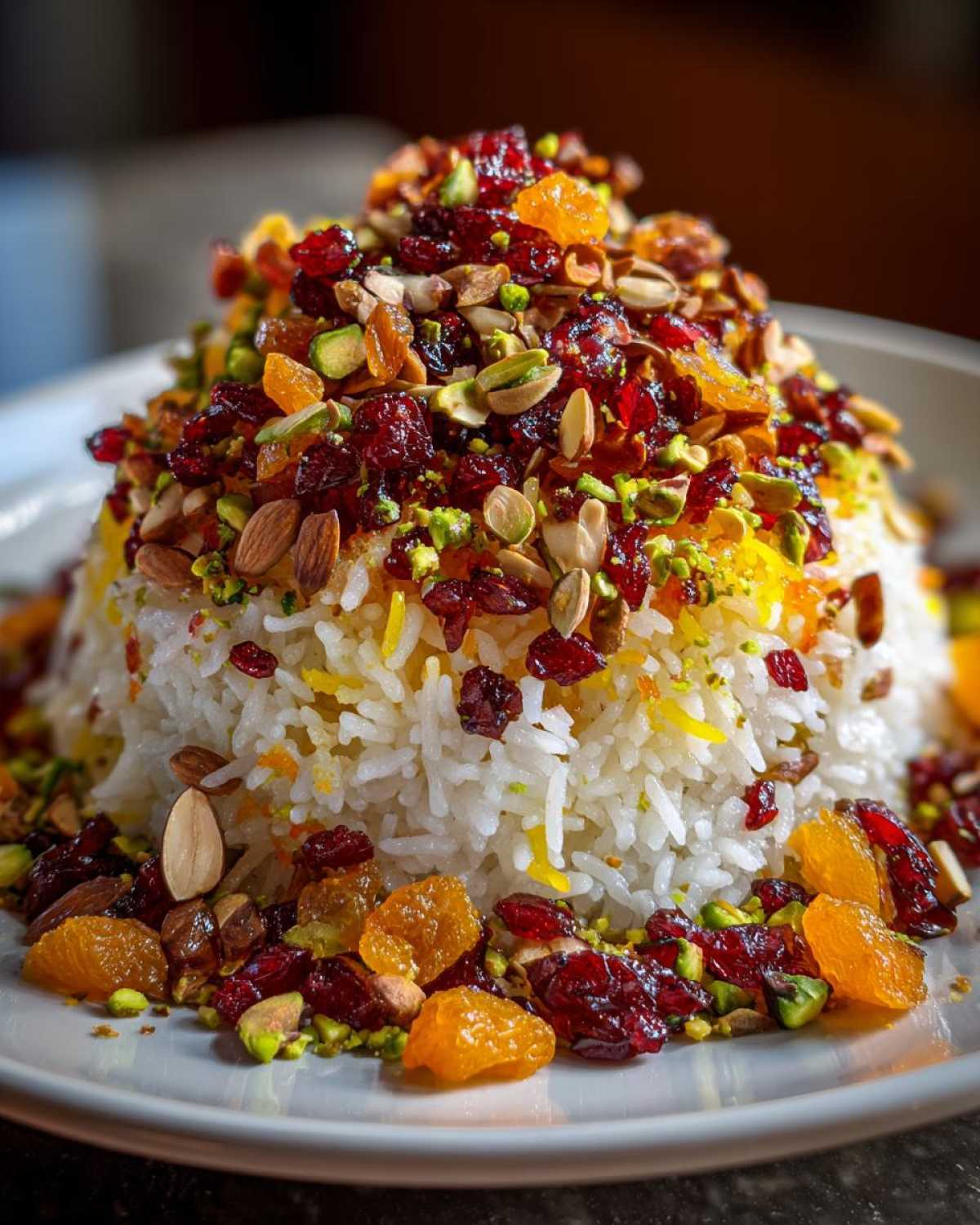
Now, for the dried fruits: the barberries, apricots, and that orange peel. The expert tip here is with those barberries. They can be super tart right out of the bag! You need to gently sauté them in a teaspoon of butter for just about a minute—I mean fast!—then toss in a tiny bit of sugar and water. As soon as they puff up and look plump like tiny rubies, pull them off the heat immediately. Overcooking them turns them hard, which is the opposite of what we want for a perfect bite!
Step-by-Step Instructions for Shirin Polo Traditional Cooking
Alright, this is the serious part, but honestly, if you follow these steps, you’ll end up with rice that tastes incredible and looks like something you’d see on a magazine cover. First things first: the rice needs a long bath. Don’t skip that soaking time; I soak mine for at least two hours, minimum! Rinsing is key—you need the water to run completely clear or you’ll end up with gummy rice, and we are aiming for fluffy perfection here!
Once it’s soaked, you’re going to bring a huge pot of salted water to a rolling boil. Drop that drained rice in and cook it just until it’s al dente. I always pull a few grains out to test—they should still have a tiny bite left in them. Drain it FAST. You don’t want it to overcook even for a minute. Set your saffron to steep in hot water too; that beautiful color needs time to bloom!
Preparing the Rice Base and Saffron Infusion
This is where we set up the flavor scaffolding. While the rice is boiling, you should have already prepared your jewels (nuts toasted, barberries plumped). Keep them warm, off to the side. The rinsing is necessary because we want to wash away all that surface starch. When the starch stays on, the rice tends to steam itself into mush instead of becoming those separate, long, fluffy grains we dream about. Never underestimate the power of clear rinse water!
How to Make Tahdig for Shirin Polo
This is the moment of truth! Grab your favourite heavy, non-stick pot. Melt that reserved oil or butter over medium heat. If you are going for the yogurt Tahdig, mix your yogurt with a little bit of that gorgeous saffron water and salt, and spread that thin layer right on the bottom. If you’re skipping the yogurt, just use the oil/butter and maybe a tablespoon of plain rice over the fat. This creates a barrier.
Now, gently layer in your par-cooked rice. Remember to drizzle that remaining saffron water over the top—it’s what gives the top layer that stunning golden hue. Cover the lid tightly with a tea towel (this traps the steam) and place it on medium-high heat for about 5 minutes. THEN, drop it down to low and let it steam for almost an hour. That low, slow steam cooks the rice perfectly and crisps up that bottom layer. If you want to see more about how I use my fondue pot for cheese nights, check out that recipe!
Tips for Success: Achieving Fluffy Persian Rice Texture Tips
Look, making that gorgeous Persian Jeweled Rice Shirin Polo Festive Purim Side Dish look easy is all about nailing the technique on the fluffiness. If you follow the steps but don’t pay attention here, you might end up with slightly dense rice, and we absolutely don’t want that.
My number one rule, learned the hard way, is: do not stir the rice once it hits the pot after par-boiling! Seriously, once you add that saffron water on top, your job is done until the bell rings. Stirring breaks those long Basmati grains, and suddenly, instead of fluffy jewels, you have sticky short-grain rice. Keep your hands off!
The second big trick everyone forgets is the lid cover. Remember that clean kitchen towel I mentioned? You must place it under the lid before you cover the pot. That towel acts like a little steam absorber, preventing condensation from dripping back down onto your perfectly cooked rice. It keeps the grains separate!
Also, pay close attention to the heat-down moment. That jump from medium-high to low is crucial for the Tahdig formation. Too low too soon, and you’ll steam the bottom instead of frying it. Too high for too long, and you’ll burn it before the top even warms up! Slow and steady wins the race for the perfect texture.
If you want more insight from my kitchen explorations, you can always poke around my other recipe posts!
Assembling Your Elegant Persian Rice Dish Presentation
Okay, the waiting is over! This is the big reveal, the moment that makes all that soaking and steaming worthwhile. You need a serving platter that’s bigger than your rice pot—mine is a big white ceramic one that really makes the colors pop.
Take a deep breath, place the platter upside down over the pot, and flip them both over quickly and confidently. You might hear a satisfying crackle; that’s the sound of perfect Tahdig! Lift the pot slowly, and boom—golden crust heaven.
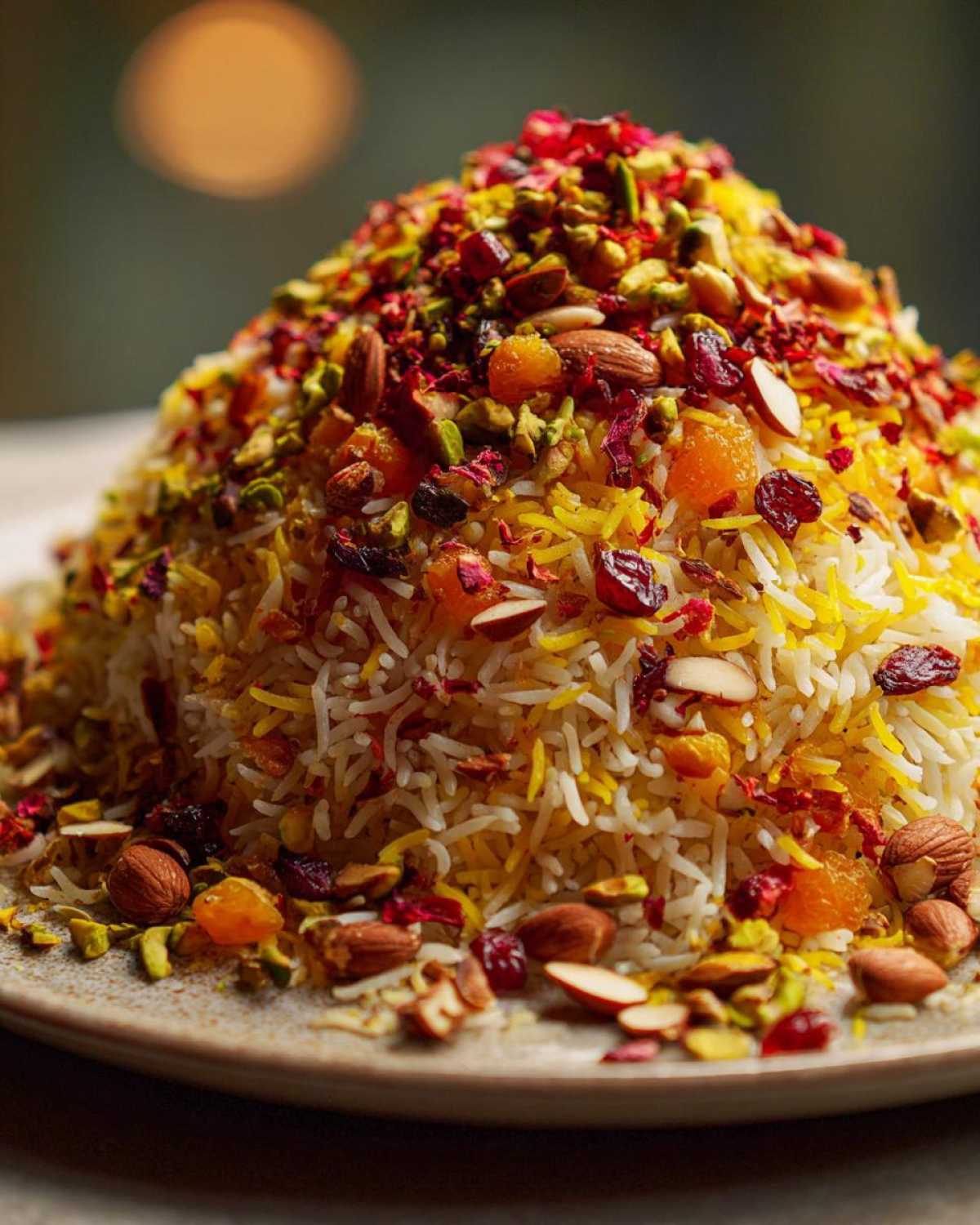
Now, gently fluff the white rice around the edges. Since you want that amazing visual appeal for your Persian Jeweled Rice Shirin Polo Festive Purim Side Dish, you’re going to spoon most of those gorgeous mixed fruits and nuts right over the center mound of fluffy white rice. Save a tiny bit for scattering around that golden Tahdig base. It’s stunning!
Ingredient Notes and Substitutions for Persian Jeweled Rice Recipe
I know that finding every single specialty ingredient can sometimes feel like a treasure hunt, but don’t panic if your local store is missing something. This Persian Jeweled Rice Recipe is forgiving if you know the proper substitutions.
The barberries (zereshk) are definitely the hardest piece to source, and they provide that essential pop of tartness. If you absolutely cannot find them, dried cranberries are the closest second, though you need to be careful with them. If you use cranberries, skip the sugar and water addition entirely because they are already sweet. Just rinse them well and toss them in with the other fruits; they won’t plump up like the barberries do, but they give excellent color.
For the orange peel, sometimes getting those candied strips is tough. If you can’t find them, don’t skip the citrus note! Take the zest of a fresh orange—just the bright orange part—and mix it with maybe half a teaspoon of sugar. You’ll want to briefly sauté it in a tiny bit of butter just to take the raw edge off, the same way we treated the barberries.
The most important thing is the quality of the Basmati rice. If you use a short-grain variety, you’re going to lose the signature look and texture. Always stick to long-grain Basmati for this—it’s worth going the extra mile to find it!
Serving Suggestions for Your Purim Celebration Side Dish
Because this Festive Rice Pilaf is so rich and visually stunning, it pairs best with something savory that lets the rice shine. Think slow-cooked meats! It’s absolutely divine next to slow-roasted lamb shank or even a simple, perfectly seasoned roast chicken.
For Purim specifically, a beautiful roasted chicken brushed with a tart glaze, like my own pomegranate glaze recipe, complements the sweetness of the apricots and orange peel so well. Keep the main dish straightforward, and let your glittering rice be the star of the show!
Storage and Reheating Instructions for Leftover Persian Jeweled Rice Shirin Polo
Look, I know you might have leftovers, or maybe you made this the day before your party—it happens! If you have extra Persian Jeweled Rice Shirin Polo, pack it tightly into an airtight container. It keeps wonderfully in the fridge for about three days. But listen closely about reheating, because this is crucial for texture.
Please, avoid the microwave if you can. The microwave just blasts moisture out of the rice, and you’ll lose that glorious fluffiness we worked so hard for! Instead, try gently reheating it in a non-stick pan over very low heat with just a tablespoon of water sprinkled in. Cover it super tightly, and let the steam warm it through. This keeps the grains separate and protects that precious Tahdig, though the Tahdig usually tastes best right out of the fridge!
Frequently Asked Questions About This Gourmet Middle Eastern Side Dish
I know you might have a few last-minute questions churning around as you get ready to serve this incredible Gourmet Middle Eastern Side Dish. Don’t worry, I’ve dealt with every possible disaster scenario in my kitchen! Here are the things people ask me most often.
Can I make the jeweled topping ahead of time?
Absolutely! I actually highly recommend this for any Festive Rice Pilaf like this. You can toast your nuts and prepare your barberries, apricots, and orange peel up to a day in advance. Just keep the mixed ‘jewels’ in an airtight container at room temperature. They stay perfectly ready to layer when your rice is finished steaming. It saves so much frantic chopping when you’re also managing the main course!
What if my rice is not fluffy?
If your rice turns out a little sticky instead of perfectly separate, it almost always boils down to two things. First, did you rinse it enough? If the water wasn’t totally clear before soaking, that residual starch made it gluey. Second, did you stir it after adding the saffron or after it went into the main pot? If you stirred the rice once it started steaming, you broke the grains. Next time, focus on the rinsing—it’s the unsung hero of Fluffy Persian Rice Texture Tips!
Is this Persian Jeweled Rice Shirin Polo Festive Purim Side Dish suitable for vegetarians?
Yes, darling, it totally is! Based on the list of ingredients, this version of the Shirin Polo Traditional Cooking is completely vegetarian. We use butter or oil for richness and to create the Tahdig, but there is no meat broth or hidden animal products in the rice itself. It’s a perfect centerpiece dish for vegetarian guests at your Purim table! If you have any other questions about the process, feel free to get in touch with me!
PrintPersian Jeweled Rice (Shirin Polo) for Festive Occasions
A detailed recipe for making authentic Shirin Polo, a festive Persian jeweled rice dish featuring saffron, barberries, nuts, and candied orange peel, perfect for celebrations like Purim.
- Prep Time: 120 min (includes soaking)
- Cook Time: 75 min
- Total Time: 195 min
- Yield: 6 servings
- Category: Side Dish
- Method: Steaming
- Cuisine: Persian
- Diet: Vegetarian
Ingredients
- 2 cups long-grain basmati rice
- 1/2 cup dried barberries (zereshk)
- 1/4 cup slivered almonds
- 1/4 cup chopped pistachios
- 1/4 cup dried orange peel strips (or zest of 1 orange, candied)
- 1/4 cup dried apricot halves, chopped
- 2 tablespoons butter or oil
- 1/2 teaspoon saffron threads, steeped in 1/4 cup hot water
- 1 teaspoon sugar (for barberries)
- Salt to taste
- 2 tablespoons vegetable oil (for Tahdig)
- 1/4 cup plain yogurt (optional, for Tahdig)
Instructions
- Rinse the basmati rice several times under cold water until the water runs clear. Soak the rice in lightly salted water for at least 2 hours. Drain well before cooking.
- Prepare the jewels: Gently sauté the barberries in 1 teaspoon of butter for 1 minute. Add 1 teaspoon of sugar and 1 tablespoon of water. Cook briefly until plump, then remove from heat.
- Blanch the almonds and pistachios in boiling water for 1 minute, then drain. Lightly toast the nuts in a dry pan until fragrant.
- Boil the soaked rice in a large pot of rapidly boiling water until it is par-cooked (al dente). Drain immediately.
- Prepare the Tahdig layer: In a non-stick pot, melt 2 tablespoons of oil or butter over medium heat. If using yogurt, mix the yogurt with 2 tablespoons of the steeped saffron water and a pinch of salt. Spread this mixture evenly over the bottom of the pot, or simply use plain oil/butter and a thin layer of rice.
- Gently layer the par-cooked rice over the Tahdig base. Create a small vent hole in the center of the rice mound. Drizzle the remaining saffron water over the top of the rice.
- Cover the pot lid with a clean kitchen towel, secure it, and place it on the pot. Cook on medium-high heat for 5 minutes, then reduce heat to low and steam for 45 to 60 minutes until the rice is fluffy and the Tahdig is crisp.
- While the rice steams, gently mix the toasted nuts, chopped apricots, orange peel, and most of the sautéed barberries in a bowl.
- To serve, carefully invert the pot onto a large platter to reveal the golden Tahdig. Gently fluff the white rice. Spoon the jeweled mixture over the top of the rice for a decorative, festive presentation.
Notes
- For the best Tahdig, ensure the oil is hot before adding the rice mixture to the bottom of the pot.
- Do not stir the rice once you add the saffron water; this prevents the grains from breaking and keeps the texture light.
- If you cannot find dried orange peel, use fresh orange zest mixed with a small amount of sugar and briefly sautéed.
Nutrition
- Serving Size: 1 cup cooked
- Calories: 450
- Sugar: 12
- Sodium: 350
- Fat: 15
- Saturated Fat: 5
- Unsaturated Fat: 10
- Trans Fat: 0
- Carbohydrates: 70
- Fiber: 4
- Protein: 10
- Cholesterol: 15