

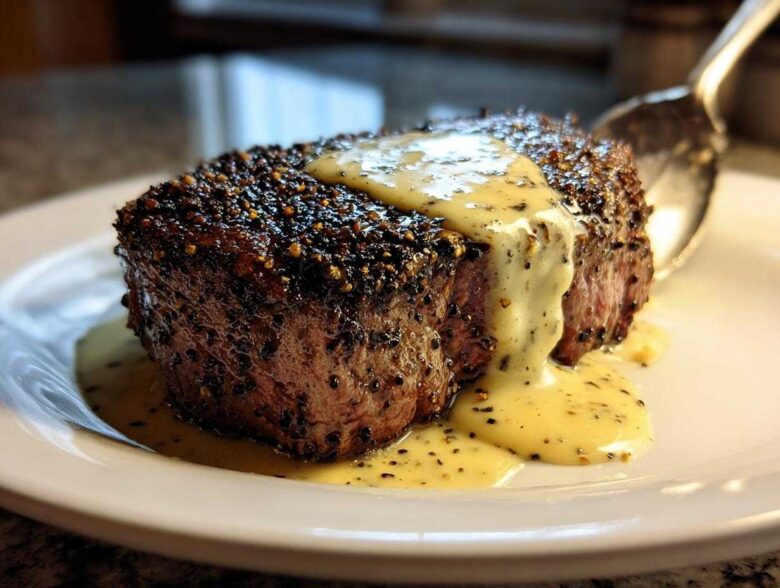
Listen, I used to think ordering steak at a fancy spot was the only way to get that perfect sear and that spicy kick. Every time I tried making a Peppercorn Crusted Filet Mignon at home, the crust would either burn or slide right off! It drove me nuts. After years of messy failures and a lot of near-burnt pans, I finally cracked the code. Seriously, this recipe is the one that changed everything. We nail that aggressively flavorful, yet tender, filet mignon every single time, and the little pan sauce we whip up at the end? Forget about it. I can promise you, after reading my process, you’ll ditch the reservation book. You can check out a little more about my kitchen philosophy over here at our story.
Why You’ll Love This Peppercorn Crusted Filet Mignon Recipe
I know what you’re thinking: “Gourmet steak dinner seems complicated.” Trust me on this one; this Peppercorn Crusted Filet Mignon proves you wrong. It looks intimidatingly fancy, but it’s secretly one of the fastest, most rewarding things you can make on a weeknight—or for a special occasion!
- Incredible Flavor Contrast: You get that amazing bite of sharp, pungent black pepper crust immediately followed by the buttery, unbelievably tender center of the filet. It’s elegance on a plate!
- It’s Faster Than Delivery: Seriously, once you crush the peppercorns, the active cooking time for the steak itself is barely 10 minutes. The whole dish, including the sauce, is done before most delivery apps estimate arrival time.
- Restaurant Quality, Home Kitchen Ease: We use simple searing techniques anyone can master. The pan sauce sounds fancy, but it’s just deglazing the pan—your skillet does most of the heavy lifting!
- Perfect Pan Sauce Included: We aren’t just serving a dry, crusted steak here. The leftover bits in the pan become a simple Dijon cream sauce that elevates the whole experience and makes you feel like a culinary genius.
Ingredients for the Perfect Peppercorn Crusted Filet Mignon
Okay, the ingredients list for this gorgeous Peppercorn Crusted Filet Mignon is short, which is a huge win! Because there are so few components, the quality of those few items really shines through. Don’t skimp here, especially on the beef! You really only need a few things to make this happen:
- Two really good 6-ounce filet mignon steaks—make sure they are nice and thick, about 1.5 inches, so we have room to develop that crust without overcooking the middle.
- Two tablespoons of whole black peppercorns. This is non-negotiable. We need whole ones so we can crush them ourselves!
- One teaspoon of coarse salt. That big chunky salt works best for texture.
- One tablespoon of good olive oil for that initial searing heat.
- One tablespoon of unsalted butter for basting—butter equals flavor, you know the drill.
- For the sauce, we just need a tiny bit: a quarter cup of beef broth, two tablespoons of heavy cream, and just a teaspoon of that slightly spicy Dijon mustard. That creamy, savory sauce is divine.
Essential Equipment for Your Peppercorn Steak Crust Cooking Guide
You don’t need a fancy array of gadgets to make a truly restaurant-worthy steak dinner. For this filet mignon recipe, we rely on a few core pieces that make all the difference in getting that perfect crust and ensuring we hit that sweet spot for doneness. Having these ready before you even pull the steaks out of the fridge makes the whole cooking process smooth and stress-free.
Here’s the lineup you’ll want on your counter:
- A Heavy Oven-Safe Skillet: People, this is a game-changer! I absolutely insist on using cast iron here. It holds an incredible amount of heat, which is what you need to get an immediate, hard sear on the steaks. If you don’t have cast iron, a heavy stainless steel pan will work, but cast iron is just king for steak.
- A Way to Crush Peppercorns: Remember, we aren’t dusting with black pepper powder; we need texture! You can use a proper mortar and pestle if you have one—that’s honestly the most satisfying way to do it. If not, just grab a sturdy plastic bag, put those peppercorns inside, and whack them a few times with the flat bottom of a heavy saucepan. Be patient but firm!
- A Reliable Instant-Read Meat Thermometer: Listen, I love my intuition, but when you are cooking a beautiful, expensive piece of beef like a filet, you can’t guess. This is where you absolutely need an accurate thermometer to nail that medium rare filet mignon temperature. Pulling the steak out even two degrees too early or too late can change the whole experience. Trust the thermometer!
- Tongs and Basting Spoon: You’ll need tongs to handle the steaks while searing and tilting the hot pan, and a large spoon is crucial later on when we start spooning that buttery goodness right over the top of the steak while it finishes in the oven.
Step-by-Step Instructions for Peppercorn Crusted Filet Mignon
Okay, this is where we turn raw ingredients into what I promise will be the best filet mignon recipe you’ve ever made. The biggest mistake people make is rushing through the preparation because they’re scared of overcooking the sear. We’re going to take our time setting up that crust, and then we move fast! It’s all about technique to get that perfect crust on our pan seared filet mignon.
Preparing the Making Peppercorn Crust for Steak
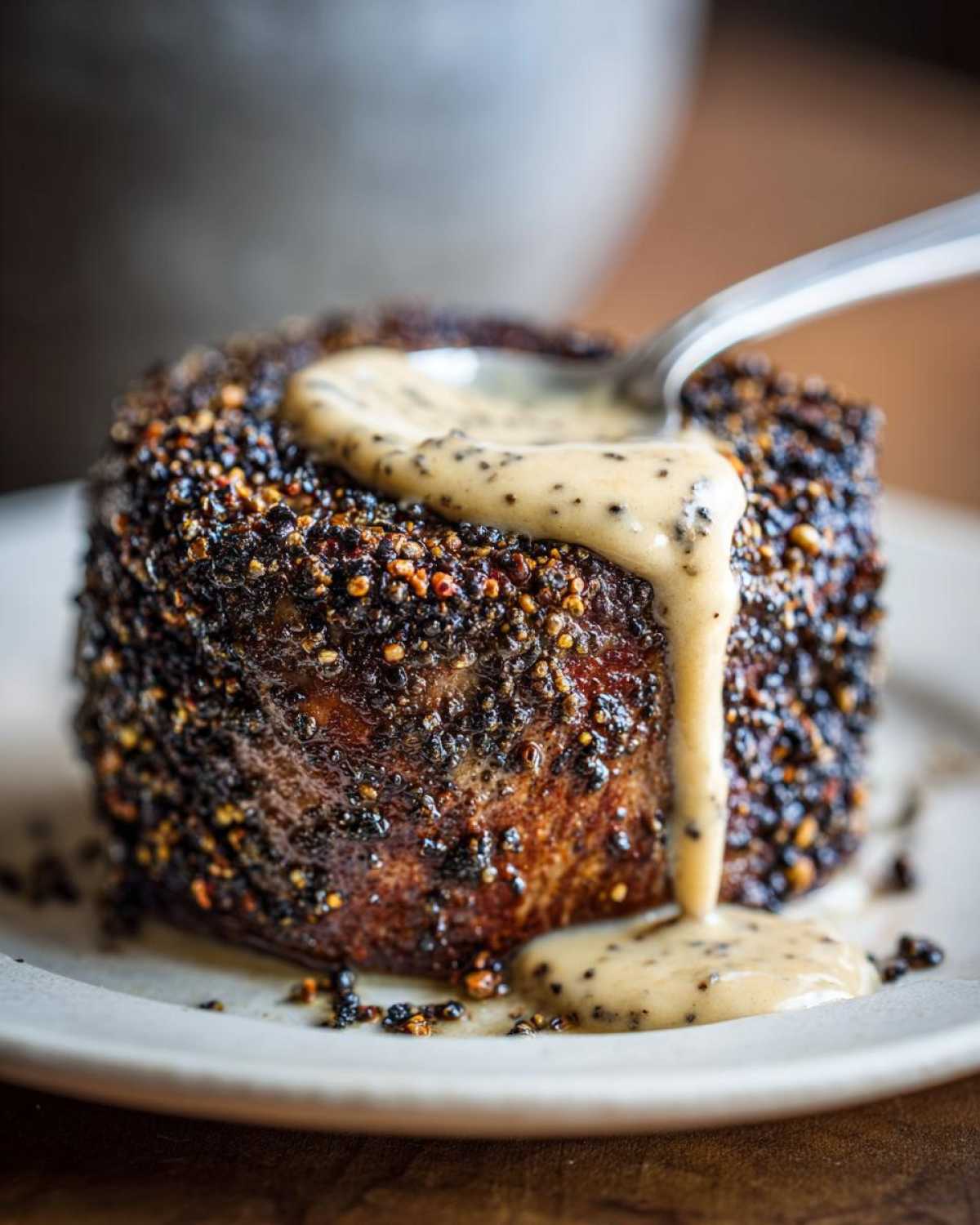
First things first: get your seasonings ready. Pour those whole black peppercorns—and I mean whole—into a bag and crush them until they look rugged, like gravel, not sand. If you crush them too fine, they’ll burn before the steak cooks! Mix those coarse beauties with your coarse salt on a plate. Now, here’s a huge secret for any good sear: dry your steaks! Grab paper towels and pat those filets until they feel dry to the touch, like suede. If they’re wet, the pan temperature drops immediately, and you steam them instead of searing them. Once they’re dry, press both sides firmly into that peppercorn mix. You really want that crust to adhere well to the meat for the final Peppercorn Crusted Filet Mignon.
Searing and Finishing the Pan Seared Filet Mignon
Get that cast-iron skillet screaming hot over medium-high heat with your olive oil. When it shimmers, those steaks go in! Sear them hard for about three or four minutes per side until you see a dark crust forming. Tilt the pan, toss in that tablespoon of butter, and spoon that melted, nutty goodness right over the tops of the steaks constantly for about 30 seconds. Then, quick as a wink, transfer that whole scorching skillet into your 400-degree oven. You are cooking to temperature now! For perfect medium-rare, pull them out when the thermometer reads 130°F. Remember, they keep cooking while they rest!
Creating the Filet Mignon with Rich Sauce Au Poivre Style
Don’t clean that skillet! That browned stuff stuck to the bottom—that’s what we call *fond*, and it’s pure gold for flavor. Take the steaks out and let them rest for a full 10 minutes; call me if you get tempted to cut into them early! Put the skillet back on the stove over medium heat. Pour in the beef broth and scrape up all those dark bits—that’s the base of our amazing sauce following those classic steak au poivre instructions. Let that reduce down by half, then swirl in the heavy cream and Dijon mustard. Just let it simmer for a minute until it coats the back of a spoon. Taste it! Spoon that rich, tangy sauce over the rested Peppercorn Crusted Filet Mignon for serving. If you need to reach out for cooking help, don’t hesitate to contact me!
Expert Tips for the Best Peppercorn Crusted Filet Mignon
You’ve got the recipe down, but sometimes the difference between a great steak and a truly unforgettable steak is just a couple of tiny, well-kept secrets. I think these tips are what really elevate my Peppercorn Crusted Filet Mignon from my kitchen to what you expect when you go out for a high-end meal. It’s all about respecting the beef and respecting the heat!
Here are the four things that I never skip when making steak:
- Start as Cold as Possible (The Steak, Not the Pan): I know we talked about getting the pan hot, but the steak itself should be as close to room temperature as possible before it hits the heat. Pull your filets out of the fridge about 45 minutes before you plan to cook them. A room-temp steak cooks more evenly from edge to center. If you sear an ice-cold steak, the outside burns while the middle is still totally raw, and it throws off your whole timing for that perfect crust.
- The Rest Is Not Optional, It Is Essential: I know waiting after cooking is the hardest part, especially when the kitchen smells this amazing! But you must let that Peppercorn Crusted Filet Mignon rest for a full 10 minutes, tented loosely under foil. If you cut it early, all that beautiful moisture and steak juice you worked so hard to keep inside during the sear just spills out onto your cutting board, leaving you with a dry steak. Resting lets the juices redistribute themselves perfectly throughout the muscle fibers.
- Don’t Over-Crush the Pepper: This is subtle, but so important for texture. If you crush the peppercorns into dust, they burn way too fast in the hot oil, turning bitter. You want them cracked, jagged, and chunky. They should bite back a little when you chew them! If you look at the ingredients list, you’ll see I insist on whole peppercorns. That uneven crush gives you those spicy pops without that dusty, acrid smoke.
- Use an Oven Thermometer: This sounds fussy, but trust me, most home ovens lie about their temperature settings! If your oven thinks it’s at 400 degrees, but it’s actually only 375, your steak will need longer in the oven, and you risk over-searing the outside crust before the inside hits the right medium rare filet mignon temperature. Buying a cheap oven thermometer and sticking it inside lets you know the real deal so you can adjust the dial accordingly.
Adjusting Doneness: Achieving Your Ideal Medium Rare Filet Mignon Temperature
So, you’ve pulled your beautiful, peppercorn-coated beauties out of the hot oven. Now what? This is the moment where science truly meets deliciousness. You cannot just guess with a filet mignon, sweetie! These steaks are lean and expensive, so we rely on the thermometer to tell us exactly when to stop cooking. Please, please, please remember that the cooking process doesn’t actually stop when you pull them out of the oven. This is called carryover cooking, and it’s why resting is so crucial.
For this 1.5-inch thick cut, we are aiming to pull the steaks out of the heat *before* they hit the final target temperature. The temperature will creep up a few degrees while they rest for those important 10 minutes. That way, when you finally slice into it, you hit perfection, not overcooked shoe leather!
Here is the temperature cheat sheet I use for a thick, pan seared filet mignon. Keep your thermometer handy and insert it into the thickest part of the steak, avoiding bone or fat pockets:
- Rare: Pull the steak from the heat when the thermometer reads 120°F. It will settle around 125°F after resting. This gives you a very cool, bright red center.
- Medium-Rare (The sweet spot!): Target pulling the steak at 128°F to 130°F. This will finish beautifully around 135°F, giving you a warm red center that melts in your mouth. This is my absolute favorite way to enjoy this filet mignon recipe.
- Medium: If you absolutely must have it more cooked through, aim to pull it at 135°F. It will hit about 140-142°F after resting. The center will be pink, but no longer truly red.
If you accidentally overshoot a little bit—and trust me, we all do sometimes because we get distracted by the wonderful aroma—don’t panic! If it’s slightly past medium-rare, just dunk the whole steak quickly into a bowl of ice water for about 30 seconds to shock the residual heat out. It’s a quick trick to stop the internal cooking process immediately! Just make sure you pat it totally dry again before serving!
Storage and Reheating Instructions for Peppercorn Crusted Filet Mignon
Oh, how I envy you if you have leftovers of this incredible Peppercorn Crusted Filet Mignon! It’s so good that usually, there’s nothing left, but for those rare occasions when you miraculously have some delicious remnants, we need to treat them right. You spent all that time making the perfect crust and that scrumptious pan sauce; we can’t ruin it by microwaving it, okay? That will turn silk into rubber instantly!
Storing steak correctly is super important if you want to retain any of that tenderness, even overnight. Here is exactly what I do when I pack mine away:
- Cool Down First: Before you even think about putting them in a container, let the steak cool down to room temperature, which usually takes about an hour after resting. Putting hot meat straight into plastic containers traps steam and makes everything soggy, including that beautiful crust we made.
- Package Separately: I try my very best not to slice the steak until I’m ready to eat it the next day. If you absolutely must slice it, keep the slices together. Place the steak in a tightly sealed, airtight container. If you made extra pan sauce—and I hope you did—store that separately! The sauce will be much better reheated on the stovetop than trying to reheat already chilled steak *in* the sauce.
- Refrigeration Window: Because this is simply seasoned beef and a simple dairy-based sauce, stick to the standard rule: eat it within three to four days max. Anything longer and you start risking quality, especially with that delicate filet meat.
Now, for the important part: reheating! We want to gently wake up that steak, not shock it back into the searing phase. Skip the microwave entirely, unless you enjoy beef jerky!
The Best Way to Reheat Steak for Texture
My go-to method for any leftover high-quality steak, especially our Peppercorn Crusted Filet Mignon, is using a very low oven. This method gently warms the steak through without forcing out any more moisture, keeping the center soft, even if the crust loses a little bit of its original crunch.
Preheat your oven to just 250 degrees Fahrenheit—keep it low and slow! Place the resting steak (un-sauced) on a small baking sheet. If you’re worried about drying it out slightly, you can put about a tablespoon of broth or water in the bottom of the baking dish to create a little steam bath environment. Pop it in for about 10 to 15 minutes. You are just aiming for hot, not cooked further.
Check the internal temperature before you pull it. If you were aiming for medium-rare (130°F) originally, pull it out when it hits about 120°F. It will warm up those final few degrees while it sits on your plate.
Reheating the Pan Sauce Au Poivre Style
Remember that amazing pan sauce we made? Reheating this is super simple. Pour the cooled sauce into a tiny little saucepan over low heat. Stir it often, and don’t let it bubble hard! You just want it warm enough to pour easily. If it seems a little too thick after chilling, swirl in just a teaspoon of water or milk to get that perfect, velvety consistency back before spooning it lovingly over your gently reheated steak.
Frequently Asked Questions About This Filet Mignon Recipe
I’ve gathered some of the questions I get most often whenever I share this recipe with friends or family. Whether you’re planning a full gourmet steak dinner or just practicing your searing skills, these little clarifications should help smooth out any final bumps! Sometimes, little changes can make a big difference in the final outcome.
Can I use a different cut of beef instead of filet mignon?
Oh, absolutely! Filet is amazing because it’s so tender, but it’s also pretty pricey, right? If you’re looking to make this crust work on a different cut, you totally can. This peppercorn steak crust works wonderfully on a nice strip steak or even a good sirloin. However, you must adjust your cooking times significantly! Cuts like strip or ribeye have a lot more marbling and need more time in the pan to render that fat before they go into the oven. Keep your thermometer handy—that’s the only reliable way to know when they’re done, regardless of the cut you choose!
You can even use this spice blend as a general dry rub for beef tenderloin if you’re cutting it into thick steaks—just treat the whole chub like a thick roast for the first little bit before slicing, or use fewer peppercorns if you’re worried about the intensity rubbing off too much meat.
What is the best way to crush peppercorns for the crust?
This is key, and I can’t stress enough: do NOT use ground pepper from the shaker! It’s too fine, and it will taste burnt before your steak is even medium-rare. We want texture for that satisfying crunch! The absolute best way, the way that gives you that perfect, rugged texture, is using a mortar and pestle. You can feel the peppercorns cracking and you control exactly how coarse they get.
If you don’t have that fancy equipment, my tried-and-true backup is the heavy pan method. Put the whole peppercorns in a sturdy zip-top bag, seal it (squeezing out all the air), place it on your cutting board, and carefully use the bottom of your heaviest skillet—maybe that cast iron one—to gently tap and press them. Move the skillet around to crush them evenly. Stop when they look chunky and irregular. That uneven crush is exactly what we want for a stunning crust on our steak!
Estimated Nutritional Data for Peppercorn Crusted Filet Mignon
I always include this section because, while we are focusing on indulgence here, it’s good to know what you’re working with. This recipe is surprisingly straightforward calorie-wise because the filet is very lean, and we aren’t adding a ton of heavy filler ingredients to the actual steak component. That rich pan sauce adds a little punch of flavor and fat, but it’s all worth it for that incredible taste!
Please keep in mind that these numbers are just a quick guideline based strictly on the ingredients listed in the recipe—two 6-ounce filets, the oil, the butter, and the pan sauce ingredients. If you use a thicker steak, or decide to use a lot more heavy cream in the sauce, these numbers will shift a bit. As we always say around here, treating yourself occasionally isn’t cheating; it’s necessary fueling! For official details and guidelines, you can always check our full disclaimer page.
Here is the approximate breakdown for one serving (one steak with a portion of the finished pan sauce):
- Serving Size: 1 steak with sauce
- Calories: Around 450
- Total Fat: 30g (But wow, look at that unsaturated fat content!)
- Saturated Fat: 14g
- Trans Fat: 0g (Hooray for clean eating!)
- Cholesterol: 150mg
- Carbohydrates: 3g
- Sugar: Just 1g (That’s coming mostly from the Dijon!)
- Protein: A whopping 42g! Perfect for refueling after a long day dreaming about steak.
- Sodium: About 450mg (This depends heavily on how much salt you use in your crust, so season carefully!)
See? Lean protein heaven! That’s why I love making an elegant beef recipe like this at home—you control every single element that goes into it.
PrintPeppercorn Crusted Filet Mignon with Pan Sauce
Follow these steps to prepare a tender filet mignon coated in a sharp, aromatic peppercorn crust and finished with a simple pan sauce.
- Prep Time: 10 min
- Cook Time: 15 min
- Total Time: 35 min
- Yield: 2 servings
- Category: Dinner
- Method: Pan Searing and Baking
- Cuisine: American
- Diet: Low Fat
Ingredients
- 2 (6 ounce) filet mignon steaks, about 1.5 inches thick
- 2 tablespoons whole black peppercorns
- 1 teaspoon coarse salt
- 1 tablespoon olive oil
- 1 tablespoon unsalted butter
- 1/4 cup beef broth
- 2 tablespoons heavy cream
- 1 teaspoon Dijon mustard
Instructions
- Place the whole peppercorns in a plastic bag and crush them coarsely using the bottom of a heavy pan or a mortar and pestle. Do not grind them into a fine powder.
- Mix the crushed peppercorns and coarse salt on a small plate.
- Pat the filet mignon steaks completely dry with paper towels. This helps achieve a good sear.
- Press both sides of each steak firmly into the peppercorn and salt mixture until the entire surface is coated.
- Heat the olive oil in a heavy, oven-safe skillet (cast iron works well) over medium-high heat until it shimmers.
- Carefully place the steaks in the hot skillet. Sear for 3 to 4 minutes per side until a dark crust forms.
- Add the butter to the skillet. Tilt the pan and use a spoon to baste the melted butter over the tops of the steaks for about 30 seconds.
- Transfer the skillet to a preheated oven at 400 degrees Fahrenheit. Cook until the desired internal temperature is reached (e.g., 130°F for medium-rare). This usually takes 4 to 6 minutes.
- Remove the steaks from the skillet and place them on a cutting board. Tent loosely with foil and let them rest for 10 minutes before slicing or serving.
- Place the skillet back on the stovetop over medium heat. Pour in the beef broth, scraping up any browned bits from the bottom of the pan. Let the broth reduce by half.
- Stir in the heavy cream and Dijon mustard. Cook for 1 minute until the sauce thickens slightly. Taste and add salt if needed.
- Serve the steaks immediately with the pan sauce spooned over top.
Notes
- For medium-rare doneness, aim for an internal temperature of 130 to 135 degrees Fahrenheit after resting.
- Use a meat thermometer inserted into the thickest part of the steak for accurate temperature readings.
- If you prefer a less intense crust, reduce the amount of crushed peppercorns used.
Nutrition
- Serving Size: 1 steak with sauce
- Calories: 450
- Sugar: 1
- Sodium: 450
- Fat: 30
- Saturated Fat: 14
- Unsaturated Fat: 16
- Trans Fat: 0
- Carbohydrates: 3
- Fiber: 0
- Protein: 42
- Cholesterol: 150