

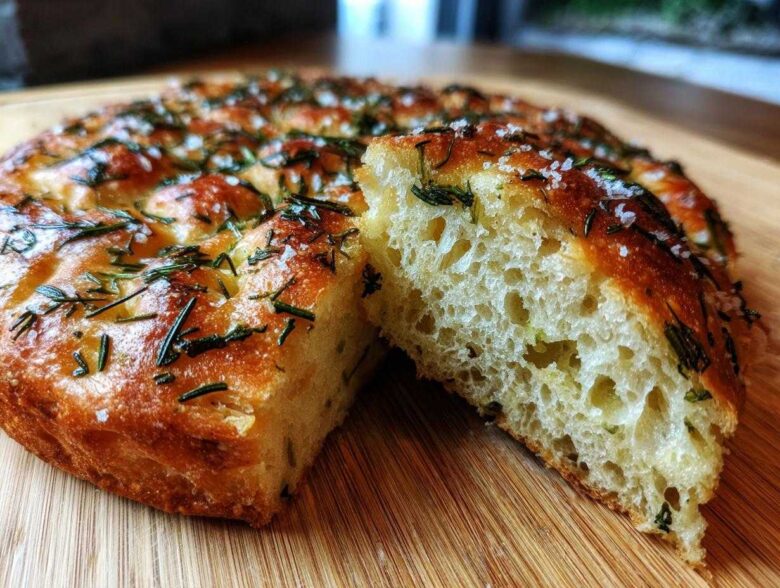
Oh, friends, let me tell you about the closest thing to magic you can pull out of your kitchen oven—and I didn’t even have to break a sweat kneading! If you think baking artisan bread means spending an hour working the dough, you need this recipe in your life right now. We are diving deep into the absolute best **No-Knead Skillet Focaccia with Rosemary**. I’m so proud of this one because it uses a simple technique to get that incredible bakery texture right in your own skillet. Seriously, you just mix it, walk away, and come back to the most aromatic, pillowy bread you’ve ever smelled. It’s totally foolproof, trust me on this!
This recipe is my go-to when I want that rustic Italian bread vibe without the fuss of a stand mixer. We’re using a cast iron piece for maximum crispiness on the bottom, which is the real secret weapon here. You just can’t get that texture from a regular baking sheet! If you are looking for more amazing things to bake, check out my main recipe blog here for inspiration.
Why This No-Knead Skillet Focaccia with Rosemary Works So Well
Honestly, the best part about this whole process is how little work you actually do! This isn’t just some Easy focaccia recipe skillet hack; it’s structural integrity achieved through time. We rely on the long, slow fermentation to do all the heavy lifting that kneading usually handles.
- The overnight rest develops those complex, slightly tangy flavors you only find in amazing rustic bread. You get incredible depth without stirring a muscle!
- We also achieve that highly desirable Soft crumb focaccia method because we never punch down or overwork the gluten structure, making it airy inside.
- For me, seeing that tall dough puff up in the pan is the best payoff. If you’re looking for tips on other hands-off doughs, check out my guide on no knead bread pan cooking!
The Magic of Long, Slow Fermentation
Think of the yeast as working overtime while you’re asleep. That 12 to 18 hours lets the dough develop tons of tiny bubbles, building flavor and giving us an open, airy interior structure naturally. It’s the secret to making truly artisan bread without the arm workout.
Achieving the Perfect Skillet Crust
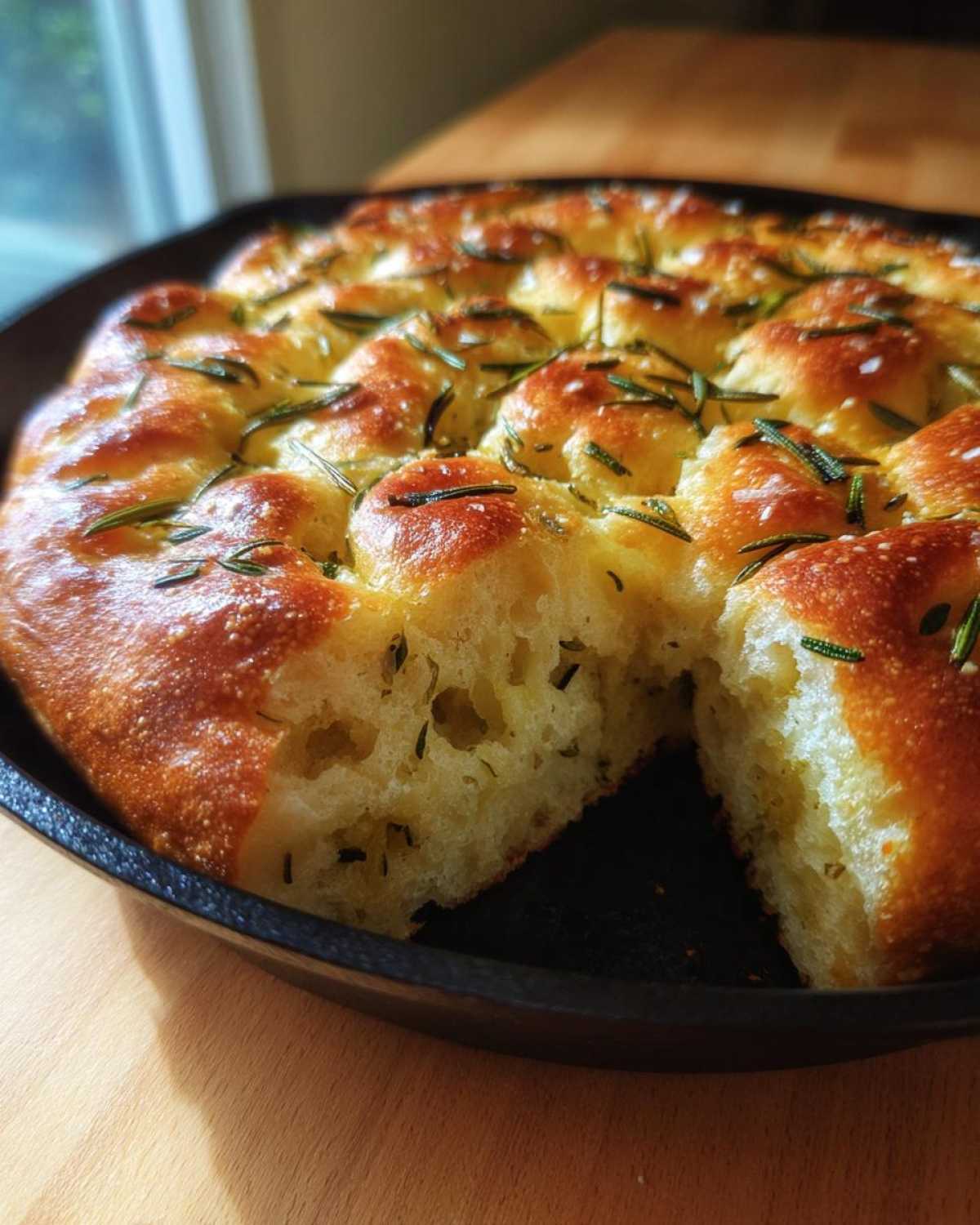
This is where the skillet comes in! Heating that heavily oiled skillet on the stovetop before it even goes near the oven is a game-changer. That initial blast of heat underneath the dough immediately sets the bottom, giving you this fantastic, slightly chewy, golden-brown base that’s characteristic of a Deep dish focaccia technique. It gets so crispy!
Gathering Ingredients for Your No-Knead Skillet Focaccia with Rosemary
Okay, let’s get our pantry ready for this absolutely delicious loaf! Getting the measurements right when you aren’t kneading is super important, so pay close attention to the flour and water ratios here. You don’t need fancy equipment, but you absolutely need quality ingredients, especially since the olive oil is a major flavor player.
Here’s exactly what you’ll need ready to go for this No-Knead Skillet Focaccia with Rosemary:
- 3 cups all-purpose flour
- 1 1/2 teaspoons instant dry yeast
- 1 1/2 teaspoons fine sea salt
- 1 1/2 cups warm water (make sure it’s between 105–115°F—not too hot!)
- 1/4 cup olive oil, plus way more for the pan
- 2 tablespoons fresh rosemary, nice and finely chopped
- 1 teaspoon coarse sea salt, for sprinkling right on top at the end
Seriously, having everything measured out right before you mix the dough ensures that your long rest period goes perfectly. This simple list is all it takes to make this incredible Quick dinner bread recipe!
Step-by-Step Instructions for No-Knead Skillet Focaccia with Rosemary
Now for the exciting part! Don’t let the long rest time scare you; the active work time is ridiculously fast. This is where we turn that shaggy dough into something truly spectacular. Make sure your oven-safe skillet is ready to go, because attention to timing here is what guarantees that beautiful crust.
Mixing the Dough and the Long Rest
First things first: grab a big bowl. Whisk your flour, instant yeast, and fine sea salt together until they look friendly. Then, pour in that warm water and the quarter cup of olive oil. You want to mix this with a wooden spoon until everything is just barely combined—it’ll look messy and shaggy, and that’s okay! Promise me you won’t knead it! Overmixing is the enemy here. Cover that bowl up tightly with plastic wrap and just leave it alone. I mean it! It needs 12 to 18 hours at room temperature to develop flavor. This long rest is what makes this **No-Knead Skillet Focaccia with Rosemary** so forgiving and deep in flavor.
Preparing the Skillet and Final Proof
When your dough is huge and bubbly (it will look totally different!), it’s time to prepare your vessel. Oil that 10-inch oven-safe skillet super generously—don’t skimp! Gently scrape that glorious mess into the oiled skillet. You might have to gently persuade it to stretch out to the edges. If it fights you, just let it sit for ten minutes to stop protesting, then press it out a bit more. Cover it loosely and let it rest again for 30 to 45 minutes. Crucially, use this time to crank your oven up to 425°F (220°C) during the second half of this proof. This entire process is key to the Foolproof no knead bread method.
Topping and Baking Your Aromatic Rosemary Bread
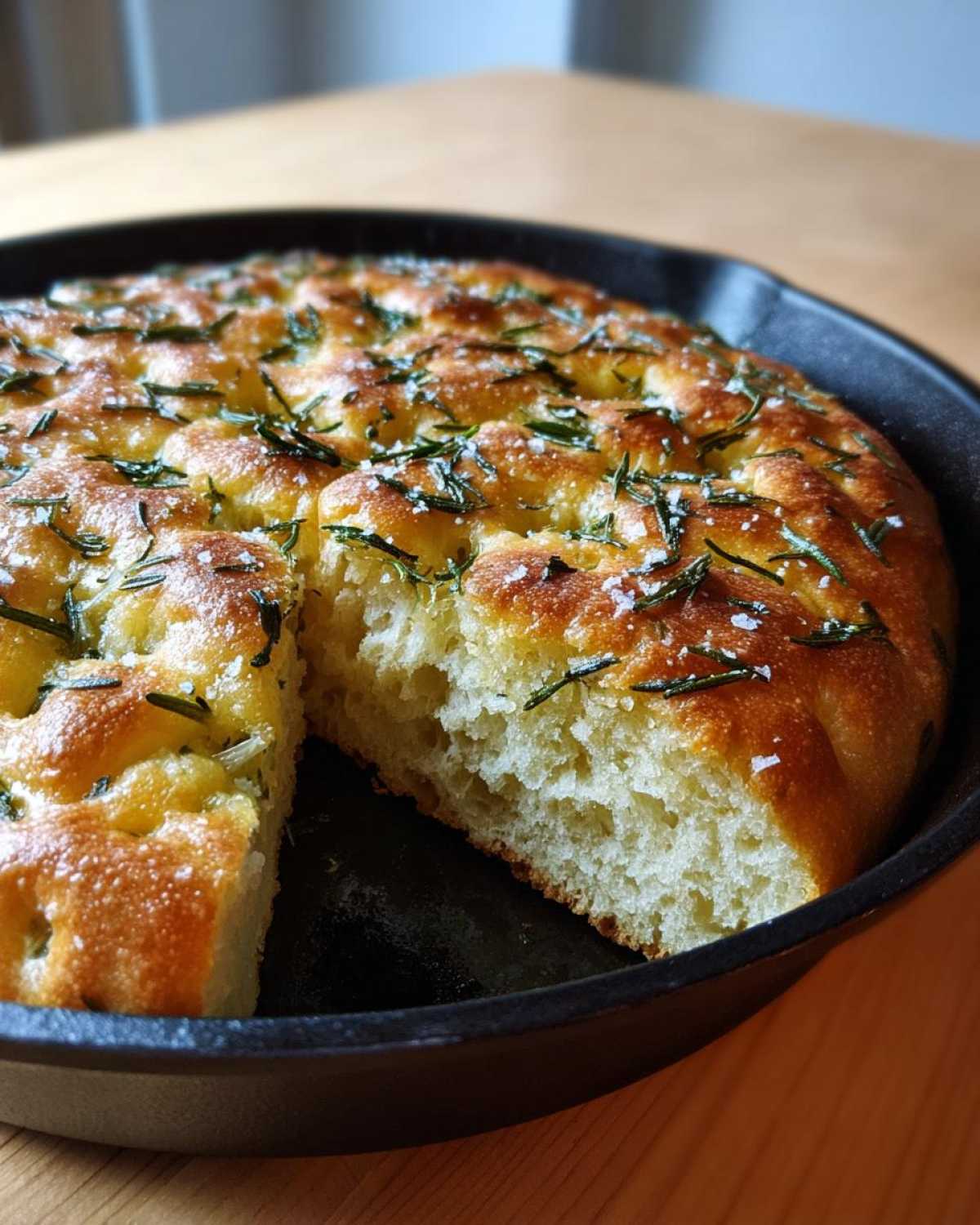
Once rested, it’s time for the fun part—the topping! Drizzle on a little extra olive oil. Now, dip your fingers in oil and press them deep, all the way to the bottom of that skillet, making those signature dimples. I always add a tiny splash of water to my fingertips so the dough doesn’t stick when I press—that’s my little trick! Scatter that chopped rosemary and the coarse sea salt evenly over the top. Before it hits the oven, put the skillet on the stovetop over medium heat for about 3 to 5 minutes. This step is non-negotiable for the Best rosemary focaccia; it really sets that bottom crust! Finally, slide that hot skillet into your preheated oven and bake for about 20 to 25 minutes until it’s beautifully golden brown. As soon as it comes out, pop that gorgeous loaf onto a wire rack immediately so the bottom doesn’t steam!
If you need some inspiration on different ways to flavor your dough, check out my post on quick rosemary bread dough variations!
Tips for the Perfect No-Knead Skillet Focaccia with Rosemary
I’ve made this dough probably fifty times over the years, and while it’s designed to be easy, a few little secrets make the difference between good and truly spectacular. First off, the olive oil quality matters so much here! Since the dough rests in it and you top it with it, use the best extra virgin olive oil you can afford; it really shines through in the final flavor, giving you that Perfectly seasoned focaccia taste we love.
If you absolutely must bake this when you don’t have time for the overnight rest, you can try it with an active dry yeast substitute, but you’ll need the dough to warm up in the oven (turned off!) for about an hour to get that required bubbly growth. Also, remember I mentioned wetting your fingers when dimpling? Do that—it prevents the sticky dough from clinging to your skin when you press those little pools for the topping oils. For topping inspiration later, I have a fun post dedicated entirely to focaccia topping ideas!
Ingredient Notes and Substitutions for Skillet Bread Baking
Since this is a no-knead dough, the structure relies heavily on the flour, so we have to be careful about what we swap out. For this specific recipe, I really, really recommend sticking to all-purpose flour. Bread flour *can* work—it has more protein—but you might need a tiny splash more water because it absorbs liquid faster. However, if you try using whole wheat or anything else, you’re moving into a different recipe territory entirely, and you might lose that light, airy pocket structure that makes this a great **No-Knead Skillet Focaccia with Rosemary**.
What about our beloved rosemary? Fresh is always the winner, hands down. The flavor and aroma are unparalleled once that bread bakes up! But life happens, right? If you only have dried rosemary, you need to adjust your idea of “2 tablespoons.” Instead, start with just two teaspoons of dried rosemary. Dried herbs are much more concentrated, and we don’t want your beautiful, Perfectly seasoned focaccia to taste like a pine tree!
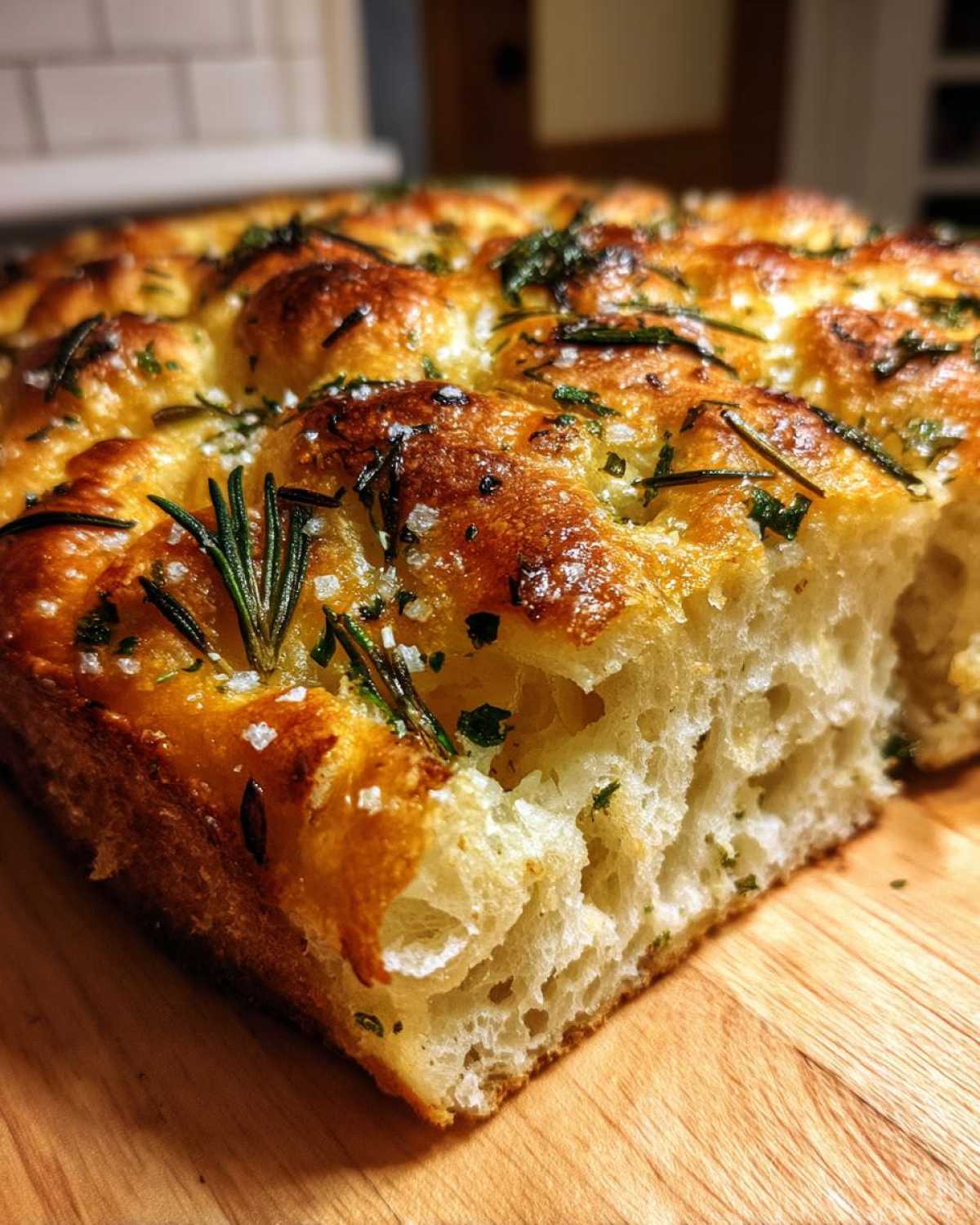
And let’s talk olive oil one more time—it’s not just a necessary ingredient; it’s a flavoring one. If you only have a mild, filtered oil sitting around, save it for brushing things that need less flavor impact. This Skillet bread baking relies on that peppery finish of a good Extra Virgin Olive Oil to really make the bread sing. It truly makes a difference!
Serving Suggestions for Your Rustic Italian Bread Recipe
Now that you’ve pulled this incredible, pillow-soft loaf out of the skillet, what are you going to eat it with? Honestly, you don’t need much to dress up this **No-Knead Skillet Focaccia with Rosemary** because the bread itself is the star! It excels as one of those perfect, Quick dinner bread recipes that you can pull together with minimal effort for a weeknight.
I love serving thick slices alongside a big, hearty bowl of soup—think lentil or Tuscan white bean soup. It’s also incredible dipped straight into high-quality balsamic vinegar with an extra drizzle of olive oil. If you’re making a spread for a party, try preparing a warm Gruyère fondue; the savory rosemary cuts through the richness perfectly! Or, keep it simple and slather it with fresh ricotta and a sprinkle of flaky salt.
Storage and Reheating No-Knead Skillet Focaccia with Rosemary
Listen, this bread is almost always gone the day I make it, but if by some miracle you have leftovers of your **No-Knead Skillet Focaccia with Rosemary**, you need to store it right. Keep it in an airtight container at room temperature, but really, only for a day or two maximum. Focaccia is best fresh!
To bring back that amazing texture? Don’t even think about the microwave! Pop the slices directly back into that cast iron skillet (if you still have it handy!) or onto a baking sheet. Heat it in a 350°F oven for just five to seven minutes. That quick blast of dry heat toasts up the bottom beautifully and softens the crumb right up again!
Frequently Asked Questions About No Knead Bread Pan Cooking
I know you might have questions, because this No Knead Skillet Focaccia with Rosemary method is a little different than regular bread making. People always ask me about the pan, or why their dough isn’t cooperating right away, but trust me, this is one of the No fuss bread recipes out there once you get the hang of the rest time!
Can I use a glass or ceramic baking dish instead of an oven-safe skillet?
You totally can, but you’ll miss out on that super crispy bottom crust we talked about! A glass pan won’t heat up the same way on the stovetop. If you must use a glass dish, skip the stovetop step (Step 10) and just bake it for the full time at 425°F. You’ll still get a lovely soft crumb, but the base won’t be as aggressively browned.
My dough didn’t double in size after 18 hours! Why?
Don’t panic! This is the biggest worry everyone has with No knead bread pan cooking. Was your kitchen cold? If your room temperature is below 70°F, the yeast gets lazy. If it hasn’t doubled, just give it more time! It might need 22 hours instead of 18. As long as the dough looks billowy and active, it’s fine. Sometimes these Quick rosemary bread dough recipes just need a little extra patience depending on your home.
Is it okay if I use dried rosemary instead of fresh?
Yes, absolutely! Fresh rosemary smells heavenly, but dried works in a total pinch, and it’s easier to keep on hand. For this recipe, use about two teaspoons of dried, crumbled rosemary for every two tablespoons of fresh called for. It’s always better to start with less dried herb and taste test before topping, though! You can find tips on using different herbs on my herbed flatbread recipe page too!
I don’t have a cast iron skillet. What size metal pan should I use?
The recipe ideally calls for a 10-inch oven-safe skillet. If you’re using a regular metal cake pan, a 9-inch round pan or a standard 8×8 inch square pan is a good substitute for volume, but you’ll need to check the original recipe notes because the baking time might shift slightly. Just remember, you need that heavy metal to handle the intense heat transfer from the stovetop!
Estimated Nutritional Data for No-Knead Skillet Focaccia with Rosemary
I always like to include a little heads-up on what you’re digging into when you pull this amazing bread out of the oven! Please remember that since this is a homemade recipe using simple, variable ingredients like oil, these numbers are purely estimates based on the measurements listed above. They are calculated per slice, assuming the bread serves 8 people.
Use this as a fun guideline, not gospel! If you use a lighter olive oil, your fat content will shift, of course. We’re aiming for deliciousness here, not a science project, right? If you have any questions about how ingredients affect the final health profile, please check out my general recipe disclaimer page here.
Here is the breakdown for one serving of this wonderful **No-Knead Skillet Focaccia with Rosemary**:
- Calories: 280
- Total Fat: 10g (with 1.5g saturated)
- Total Carbohydrates: 42g (with 2g Fiber)
- Protein: 7g
- Sodium: 350mg
It’s pretty incredible that this incredibly flavorful and aromatic bread, made with such simple fats and flours, clocks in so nicely! It proves you don’t need heaps of sugar in Homemade artisan bread without machine to get a satisfying result.
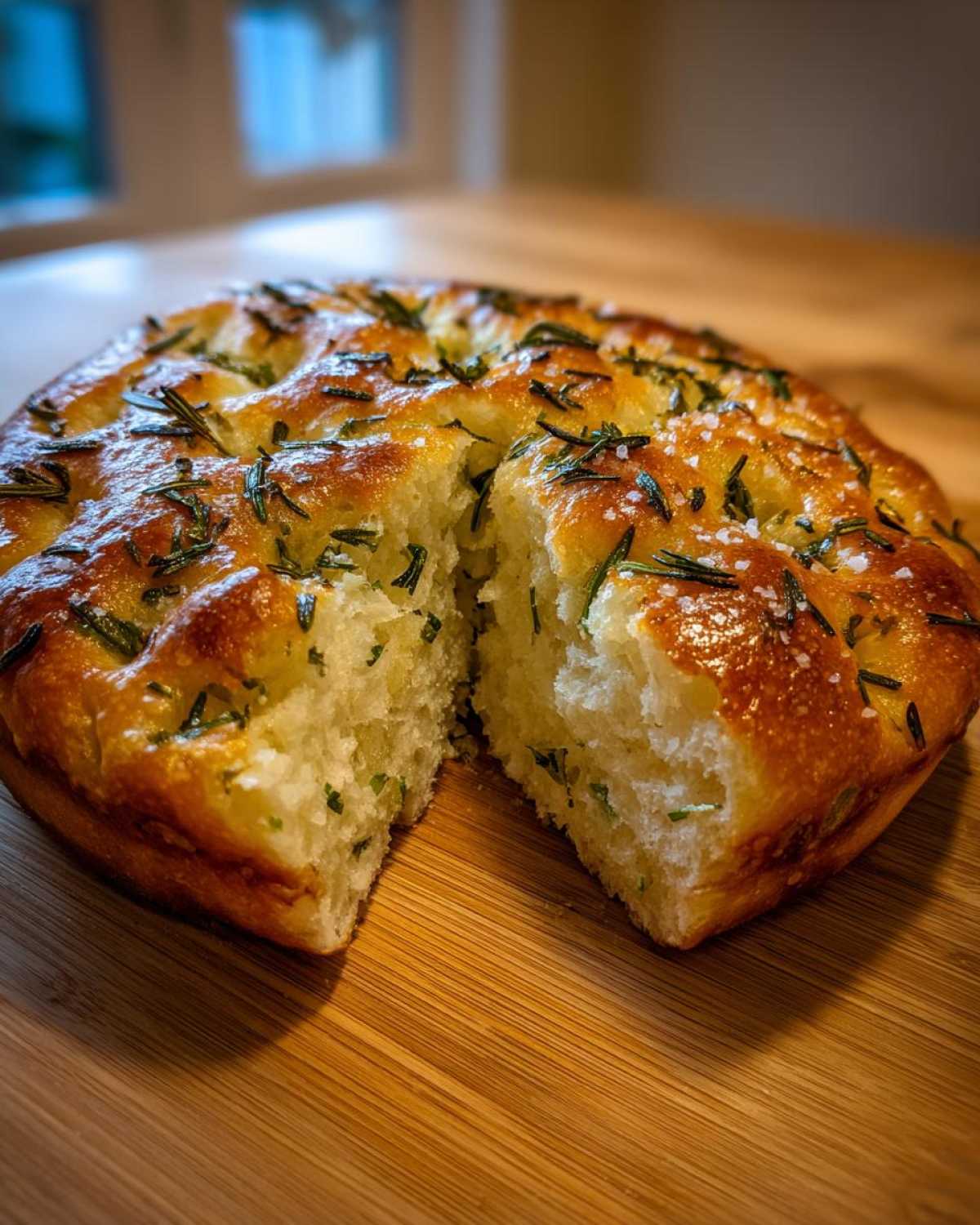
Effortless No-Knead Skillet Focaccia with Fresh Rosemary and Sea Salt
Make soft, flavorful focaccia bread using a simple no-knead method cooked in a skillet for a crisp bottom crust.
- Prep Time: 15 min
- Cook Time: 25 min
- Total Time: 14 hours 40 min
- Yield: 8 servings
- Category: Bread
- Method: Baking
- Cuisine: Italian
- Diet: Vegetarian
Ingredients
- 3 cups all-purpose flour
- 1 1/2 teaspoons instant dry yeast
- 1 1/2 teaspoons fine sea salt
- 1 1/2 cups warm water (about 105-115°F)
- 1/4 cup olive oil, plus more for the pan
- 2 tablespoons fresh rosemary, chopped
- 1 teaspoon coarse sea salt, for topping
Instructions
- In a large bowl, whisk together the flour, yeast, and fine sea salt.
- Pour in the warm water and 1/4 cup of olive oil. Mix with a wooden spoon until just combined into a shaggy dough. Do not overmix or knead.
- Cover the bowl tightly with plastic wrap and let the dough rest at room temperature for 12 to 18 hours, or until it has doubled in size and is very bubbly.
- Generously coat the bottom and sides of a 10-inch oven-safe skillet (cast iron works well) with olive oil.
- Gently scrape the dough out of the bowl and place it into the prepared skillet. Turn the dough over once to coat it lightly in oil.
- Use oiled fingers to gently stretch and press the dough to fill the bottom of the skillet. If the dough resists, let it rest for 10 minutes, then continue stretching.
- Cover the skillet loosely and let the dough proof for 30 to 45 minutes. Preheat your oven to 425°F (220°C) during the last 15 minutes of proofing.
- Dimple the top of the dough deeply all over with your fingers. Drizzle with a little extra olive oil.
- Sprinkle the chopped rosemary and coarse sea salt evenly over the top.
- Place the skillet on the stovetop over medium heat for 3 to 5 minutes to heat the bottom of the dough before baking. This helps create a crisp crust.
- Transfer the skillet to the preheated oven. Bake for 20 to 25 minutes, or until the top is golden brown and cooked through.
- Carefully remove the focaccia from the skillet immediately after baking and let it cool slightly on a wire rack before slicing.
Notes
- For a deeper flavor, you can use 1/4 teaspoon of active dry yeast and let the dough rest for 24 hours.
- If you do not have an oven-safe skillet, transfer the dough to a lightly oiled 9×13 inch baking pan after the initial stovetop heating step.
- Use good quality olive oil for the best flavor in the dough and as a topping.
Nutrition
- Serving Size: 1 slice
- Calories: 280
- Sugar: 1
- Sodium: 350
- Fat: 10
- Saturated Fat: 1.5
- Unsaturated Fat: 8.5
- Trans Fat: 0
- Carbohydrates: 42
- Fiber: 2
- Protein: 7
- Cholesterol: 0