

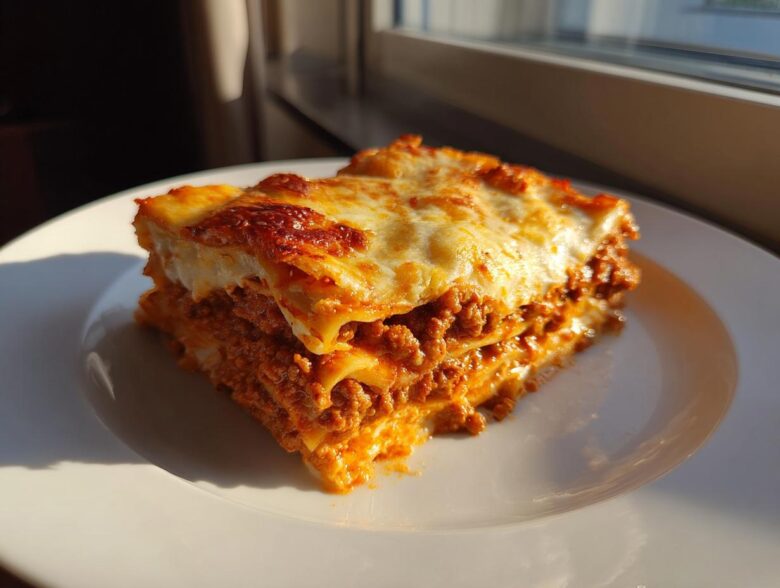
There is nothing—absolutely nothing—that shouts comfort and home quite like a truly spectacular, deeply layered Italian Lasagna. I’ve spent years testing every recipe under the sun, trying to nail down the version they actually make in Bologna, not the one some Americanized take-out places try to pass off. Forget the overly chunky sauces or the watery ricotta mixtures you might be used to. My method cuts straight to the heart of tradition: a long-simmered, savory ragù paired with a luscious, creamy béchamel sauce. Trust me, once you master this classic layered pasta bake, you won’t go back. It’s an act of love, but the result is pure magic!
Why This Authentic Italian Lasagna Recipe Works (E-E-A-T Focus)
So why is this called the best Authentic Italian Lasagna Recipe? It boils down to two non-negotiable elements that define the real Lasagne alla Bolognese. First, you need that incredible, slow-cooked ragù. I’m talking hours of simmering until the meat and vegetables melt into a deep, complex sauce. That richness is what makes the entire dish sing!
Second, we are skipping the ricotta entirely! That’s the key difference between Americanized versions and this truly Traditional Lasagna Bolognese. We are using a classic, velvety béchamel sauce. Béchamel provides a pure, creamy texture that binds the layers perfectly without adding any grainy texture. It’s luxurious, it’s authentic, and it’s foolproof when you follow the technique I lay out below. You can check out more of my tested cooking philosophies over on my main cooking blog!
Gathering Ingredients for Classic Italian Lasagna
Okay, now that you know we are making the *real deal*—no shortcuts allowed!—we need to get our ingredients ready. Think of this recipe as having two parts that have to be perfect before assembly begins: the hearty, deeply flavored ragù and that silky béchamel.
For the vegetables in the sauce, you really need to chop that onion, carrot, and celery very finely—almost minced, which we call a *soffritto* in Italy. Precision here helps everything break down during that long simmer. And for the pasta, I prefer using fresh sheets if I can find them, but if you’re going the dried route, please grab the “no-boil” kind. That just makes things so much easier, provided your sauces are just slightly looser to hydrate them.
Ingredients for the Slow Cooked Ragù for Lasagna
- 1 tablespoon olive oil
- 1 pound ground beef
- 1/2 pound ground pork
- 1/2 cup finely chopped onion
- 1/2 cup finely chopped carrot
- 1/2 cup finely chopped celery
- 1 cup dry red wine
- 28 ounces crushed tomatoes
- 1 cup whole milk
- 1/4 teaspoon ground nutmeg
- Salt and black pepper to taste
Ingredients for the Real Italian Lasagna with Béchamel
- 1 pound fresh lasagna pasta sheets (or no-boil dried)
- 1/2 cup grated Parmesan cheese for layering
- For the Béchamel: 4 tablespoons unsalted butter
- 4 tablespoons all-purpose flour
- 3 cups whole milk, warmed
How to Make the Slow Cooked Ragù for Lasagna
This ragù isn’t something you rush, guys. Seriously, this is where the deep, rich flavor for your Italian Lasagna comes from. Get a big, heavy pot—the kind that holds heat really well—and start by heating up that olive oil over medium heat until it shimmers a little. Throw in your ground beef and pork. You want to break it all up so it’s nicely browned, and make sure you drain off any big pools of fat afterward. We want flavor, not grease!
Next up are those finely chopped veggies: onion, carrot, and celery. Let them sweat down until they get soft and smell sweet, which takes a good eight minutes. The magic step happens when you pour in that red wine. Let it bubble away and cook down until it’s almost gone—that’s called deglazing, and you’re scraping up all those flavor bits stuck to the bottom. Wow, the smell in the kitchen is already amazing!
Finally, add your tomatoes and that secret ingredient that makes this authentic: the cup of whole milk. This mellows out the acidity and adds body. Bring it all up to a gentle simmer, then turn the heat way, way down low. Cover it partially and just let it go for at least two hours. The longer it simmers, the better! You need to stir it every so often, maybe every 30 minutes, just to make sure nothing’s sticking to the bottom. I promise that slow cook time is worth every minute. If you want a deeper dive into the sauce itself, check out the specifics on my slow cooked ragù for lasagna guide.
Preparing the Perfect Creamy Lasagna Layers (Béchamel)
If you thought the ragù took patience, get ready for the elegance of the béchamel. This sauce is what separates a good lasagna from an absolutely dreamy Classic Italian Layered Pasta Bake. We are making this sauce right on the stovetop, and the real trick is keeping your whisk moving constantly—I mean it! Whisking is your best friend here to guarantee those smooth, lump-free, Perfect Creamy Lasagna Layers.
Start by melting your butter in a saucepan over medium heat. Once it’s totally melted and bubbly, whisk in the flour all at once. This mixture is called a roux, and you need to cook it for just about sixty seconds, stirring it into the butter. If it starts smelling nutty, you’re doing great, but don’t let it brown.
Now, here’s where the milk comes in. Make sure your milk is warm—it dramatically helps prevent lumps! Pour in just a splash of the warm milk first and whisk like mad until it’s fully incorporated into the roux and you have a thick paste. Once that’s smooth, slowly start pouring in the rest of the milk, whisking steadily as you go. Keep the heat on medium-low and keep whisking until the sauce thickens up enough to coat the back of a spoon. If you drag your finger across the coated spoon, the line should hold clearly. That’s the perfect consistency for our No Ricotta Italian Lasagna!
Pull it right off the heat and stir in your seasoning. Don’t forget that tiny pinch of nutmeg; it’s traditional and adds such a lovely background warmth that complements the savory ragù beautifully. Taste it for salt and pepper and get ready to layer!
Tips for Perfect Italian Lasagna Assembly
We finally made the sauce, now onto the fun part: the architecture of your Italian Lasagna! Before you even touch a noodle, make sure your oven is preheated to 375°F (190°C). You need that heat ready to go! Grab a 9×13 inch baking dish and grease it lightly—we don’t want any sticking drama later.
The layering sequence is critical for success. Start by spreading just a thin layer of the ragù right on the bottom of the dish. This acts like a protective barrier so your first layer of pasta doesn’t glue itself to the ceramic. Next, lay down your pasta sheets right over the sauce base.
Now, take turns with the creamy sauces! Spread a nice, even, thin layer of that béchamel over the pasta. Then go right over that with another layer of your ragù. Finally, hit it with a light sprinkle of that sharp Parmesan cheese. That’s one complete layer! Just repeat that cycle—pasta, béchamel, ragù, Parmesan—until you run out of ingredients or reach the top of your dish. Always make sure your final top layer is béchamel so it browns perfectly instead of drying out.
Baking and Resting Your Italian Lasagna
Alright, assembly is done, and now the magic happens in the oven! We’re aiming for that molten center and that beautifully browned top crust. Get that oven preheated to 375°F (190°C). Place your assembled lasagna inside, but here’s the deal: cover it loosely with aluminum foil first. This traps the steam and lets the pasta sheets fully absorb all that glorious sauce without the top burning prematurely. Bake it like that for a solid 25 minutes. You want it nice and hot all the way through.
After that initial covered bake, it’s time to unveil the beauty! Gently pull off that foil. Now, let it bake uncovered for another 15 to 20 minutes. You’re looking for that classic bubbly action around the edges and a rich, golden-brown color across the top béchamel layer. If you added mozzarella, it should be gorgeously melted and lightly browned up there too. Keep an eye on it during this final phase—it goes from perfect to overdone quick!
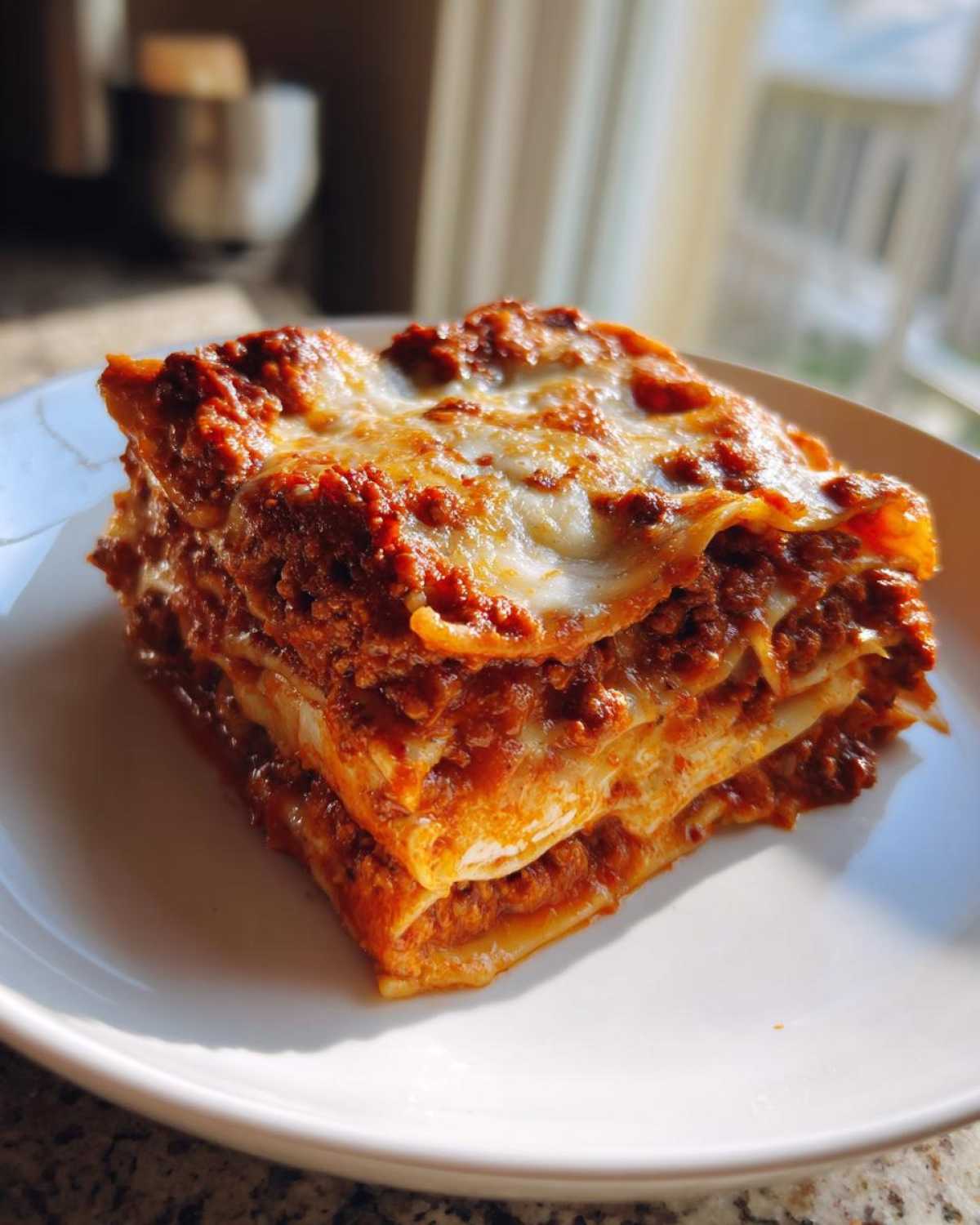
Now, pay close attention, because this next step is non-negotiable for that perfect slice—it’s my biggest pro tip for serving Italian Lasagna. You *must* let it rest! Once it comes out of the oven, set that hot dish on a cooling rack and just leave it alone for 15 minutes. Why? If you try to cut into it immediately, everything runs out, and you end up with a soupy mess on your plate. Those 15 minutes let the layers firm up just enough so you get that clean, defined slice that shows off all your hard work! The flavor develops even more while it rests too. Promise me you’ll let it sit. To find more great dinner tips and recipes, swing by my dinner category!
Ingredient Notes and Substitutions for Your Italian Lasagna
I always get questions after people first look at this ingredient list because it’s a little different from what they’re used to in their family recipes. That’s okay! We are aiming for that authentic taste here, which means we stick to tradition. The biggest point of confusion is always the ragù versus Bolognese question, and whether you need to make your own pasta.
Remember, the milk in the ragù isn’t just for show; it tenderizes the meat and balances the tomato acidity so beautifully. If you’re trying this for the first time, stick to the slow cook time for the ragù, as that’s where the depth comes from. I’ve tested using store-bought dried pasta, and honestly, for Easy Authentic Lasagna, the ‘no-boil’ sheets work just fine, but you need to be careful with your sauce consistency!
Pasta Choices: Homemade Italian Lasagna Noodles vs. Store-Bought
If you have the time and a pasta machine, making your own Homemade Italian Lasagna Noodles is an incredible experience; the texture is unbeatable! Fresh pasta cooks so quickly, and you usually don’t even need to pre-boil it if your ragù and béchamel are properly saucy—it just cooks right in the oven. The key for fresh pasta is ensuring your layers aren’t too thick.
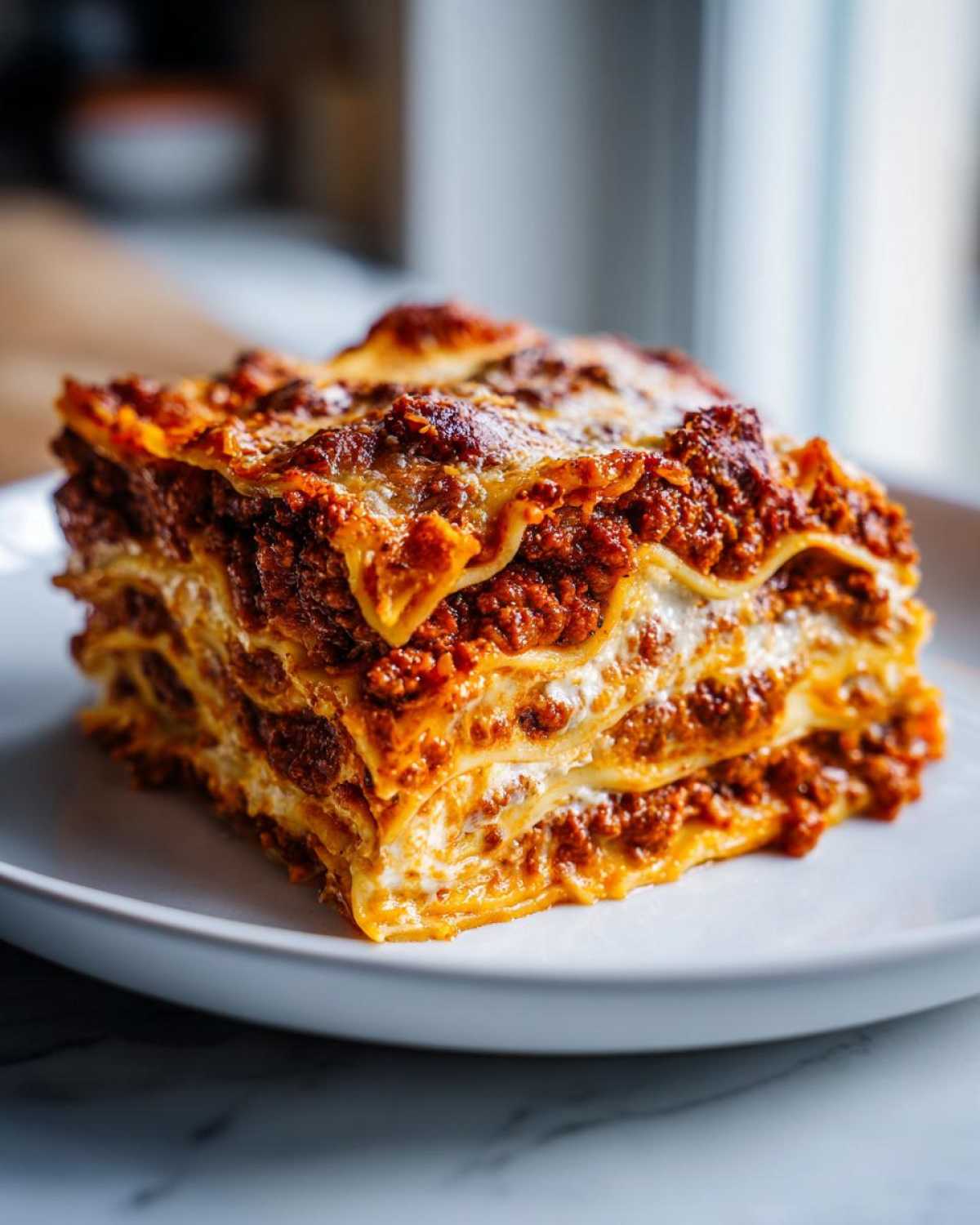
Now, if you’re aiming for Italian Weeknight Lasagna speed, grab those dried, no-boil sheets. My main piece of advice when using those is to remember they soak up a lot of liquid during baking. So, if your final ragù or béchamel seems a little thicker than usual, stir in an extra tablespoon or two of water or whole milk before you assemble. That extra moisture ensures those dried sheets get soft and tender, giving you those Perfect Creamy Lasagna Layers every time.
Frequently Asked Questions About Traditional Lasagna Bolognese
I know you’ve got questions because this recipe is so different from the ones we grew up with! Every time I post a picture of this beauty, someone asks about the béchamel or the resting time. It’s totally normal when you’re trying to achieve the real thing. Let’s tackle some of the biggest questions right here so you feel totally confident making your Classic Italian Layered Pasta Bake!
Can I Make This Italian Lasagna Ahead of Time?
Oh, absolutely! This is my favorite trick for hosting. You can totally make this Italian Lasagna ahead of time, which saves so much stress on the day you want to eat it. You assemble the entire dish exactly as the instructions say—all the layers, topped with the final layer of béchamel. Then, cover the dish tightly with plastic wrap and foil and stick it right in the fridge. It keeps beautifully for up to 24 hours!
Since it’s going in cold, you just have to add about 10 to 15 minutes to the covered baking time. So, instead of 25 minutes covered at 375°F, give it 35 or 40 minutes. Then, uncover it and bake until it’s bubbly and hot all the way through. The resting time after baking is still crucial, even if you bake it from cold!
What is the difference between Ragù and Bolognese Sauce?
This is a great question that trips a lot of people up! Technically, a true *Ragù alla Bolognese* is a specific type of meat sauce originating from Bologna, which is exactly what we’ve made here with the addition of milk and a long simmer. However, outside of Italy, many people just call any slow-cooked meat sauce a Bolognese.
What makes this recipe specifically geared toward the traditional pairing for Lasagne alla Bolognese is that the ragù should be sturdy enough to hold up between those creamy layers without turning the whole thing soupy. Our long, slow cook and the inclusion of the milk and wine create that perfect density. If you’re looking for more ways to use up your sauce, feel free to reach out to me via my contact page!
Why don’t you use ricotta cheese?
Simple: authenticity! Ricotta is wonderfully delicious, but it’s a staple in Southern Italian lasagna styles, like those from Naples. For the Northern Italian style, Lasagne alla Bolognese, the creamy element is the béchamel sauce. Substituting béchamel instead of ricotta changes the texture from slightly grainy and fresh (ricotta) to incredibly smooth, rich, and cohesive (béchamel). It’s just the way it’s done in Emilia-Romagna, and trust me, once you try this Real Italian Lasagna with Béchamel, you’ll understand why we stick to it!
Storing and Reheating Leftover Italian Lasagna
Oh, the best part of making a huge pan of Italian Lasagna? Having leftovers for days! Seriously, this stuff tastes even better the next day when all those flavors have really settled into each other. Don’t you dare serve this dish without saving some!
If you have leftovers, you need to store them correctly right away. Stick the slices or the rest of the pan in an airtight container or wrap it up tightly in plastic wrap and foil. It keeps wonderfully in the refrigerator for about three or four days. I’ve even tried keeping it five days, but honestly, I think the fourth day is the peak freshness for that creamy béchamel.
If you decide you can’t possibly eat it all or you want to save some for a future weeknight treat—because who doesn’t want an Easy Authentic Lasagna waiting for them?—freezing is the way to go. Once it’s completely cooled, wrap individual servings really, really well. I usually do a layer of plastic wrap, then a layer of aluminum foil. That double wrap protects it from freezer burn. This lasagna freezes beautifully for up to three months. You can find some of my favorite quick meals over on my snacks and quick meals page, but this lasagna is worth the effort!
When it comes time to reheat, you have options depending on how much you are warming up. For a single slice, the microwave is my go-to—just use a lower power setting and heat it in short bursts (maybe 45 seconds at a time) just to keep it from drying out. If you’re warming up a bigger chunk or the whole pan, setting the oven low, around 325°F (160°C), and covering it loosely with foil will bring it back to that just-baked moisture level without turning it rubbery. Trust me, the resting time was crucial for the first bake, and a little extra time for reheating is crucial for the leftovers to maintain that perfect texture!
PrintClassic Lasagna Bolognese
A recipe for traditional Lasagna Bolognese using slow-cooked ragù and creamy béchamel sauce, layered with fresh pasta sheets.
- Prep Time: 45 min
- Cook Time: 150 min
- Total Time: 195 min
- Yield: 8 servings
- Category: Dinner
- Method: Baking
- Cuisine: Italian
- Diet: Low Fat
Ingredients
- 1 tablespoon olive oil
- 1 pound ground beef
- 1/2 pound ground pork
- 1/2 cup finely chopped onion
- 1/2 cup finely chopped carrot
- 1/2 cup finely chopped celery
- 1 cup dry red wine
- 28 ounces crushed tomatoes
- 1 cup whole milk
- 1/4 teaspoon ground nutmeg
- 1 pound fresh lasagna pasta sheets (or no-boil dried)
- 1/2 cup grated Parmesan cheese for layering
- Salt and black pepper to taste
- For the Béchamel: 4 tablespoons unsalted butter
- 4 tablespoons all-purpose flour
- 3 cups whole milk, warmed
Instructions
- Prepare the Ragù: Heat olive oil in a large pot over medium heat. Add ground beef and pork, breaking it up as it cooks until browned. Drain excess fat.
- Add onion, carrot, and celery to the pot. Cook until softened, about 8 minutes.
- Pour in red wine and let it reduce by half, scraping up any browned bits from the bottom.
- Stir in crushed tomatoes and whole milk. Season with salt and pepper. Bring to a simmer, then reduce heat to low, cover partially, and cook slowly for at least 2 hours, stirring occasionally.
- Prepare the Béchamel: Melt butter in a saucepan over medium heat. Whisk in flour and cook for 1 minute.
- Gradually whisk in the warm milk until the sauce is smooth and thick enough to coat the back of a spoon. Remove from heat and stir in nutmeg, salt, and pepper.
- Assemble the Lasagna: Preheat your oven to 375°F (190°C). Lightly grease a 9×13 inch baking dish.
- Spread a thin layer of ragù on the bottom of the dish. Top with a layer of pasta sheets.
- Spread a thin layer of béchamel over the pasta, followed by a layer of ragù. Sprinkle lightly with Parmesan cheese.
- Repeat the layering process: pasta, béchamel, ragù, Parmesan, until all ingredients are used, ending with a layer of béchamel on top.
- Bake: Cover the dish loosely with aluminum foil. Bake for 25 minutes. Remove the foil and bake for an additional 15-20 minutes, or until the top is golden brown and bubbly.
- Rest: Let the lasagna rest for 15 minutes before slicing and serving.
Notes
- If you use dried, no-boil lasagna sheets, ensure your sauces are slightly wetter to allow them to hydrate properly during baking.
- For the most authentic flavor, cook the ragù for 3 hours or more.
- If you prefer a richer top crust, sprinkle mozzarella cheese over the final béchamel layer before baking.
Nutrition
- Serving Size: 1 slice
- Calories: 550
- Sugar: 12
- Sodium: 650
- Fat: 30
- Saturated Fat: 14
- Unsaturated Fat: 10
- Trans Fat: 1
- Carbohydrates: 45
- Fiber: 4
- Protein: 32
- Cholesterol: 110